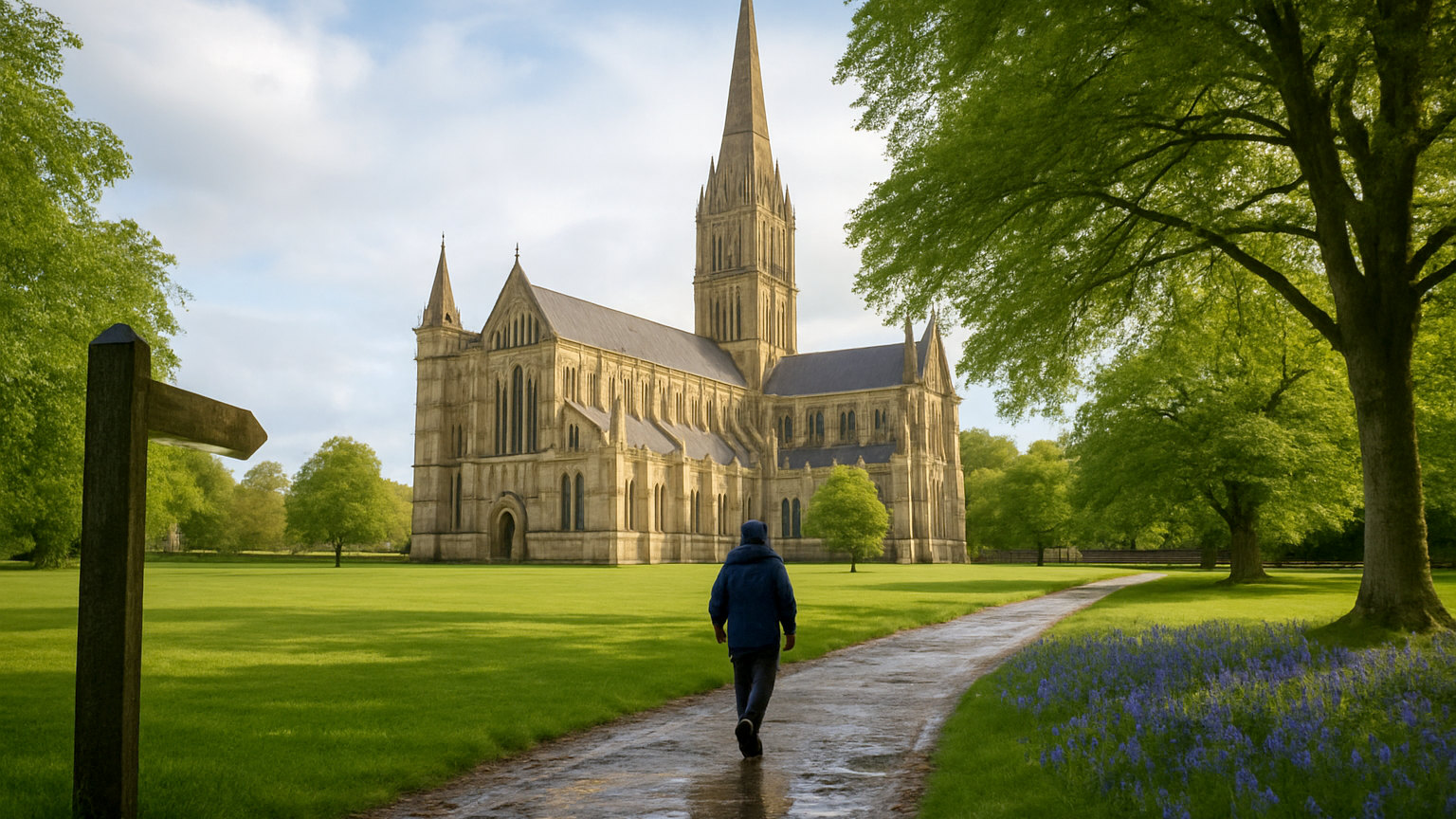
Salisbury Cathedral was built between 1220 and 1258 after the clergy abandoned the exposed hilltop settlement at Old Sarum. Because it went up in one campaign it is almost entirely in a single architectural style, which is very unusual in England and gives the building its coherence.
How tall is the spire?
Around a hundred and twenty three metres, the tallest in Britain, and it was added a generation after the church was finished rather than being part of the original plan.
It weighs enough that the piers beneath it visibly bend, which you can see by sighting up the columns at the crossing. Medieval bracing arches were inserted to hold it.
What does the tower tour involve?
A climb of around three hundred and thirty steps into the base of the spire, passing through the roof space above the vaults and out onto a parapet.
The thirteenth century wooden scaffolding used to build the spire is still in position inside it, which is the single most remarkable thing in the building.
What is in the chapter house?
One of only four surviving original copies of Magna Carta from 1215, and by general agreement the best preserved of them, displayed in a purpose built case.
The chapter house itself has a medieval frieze running round the walls showing scenes from Genesis, and a single slender central column.
What is the clock?
A mechanism in the nave dating from around 1386, with no face, which originally struck the hours on a bell. It is widely described as the oldest working clock in the world.
It runs on most days and is easy to walk straight past, which most visitors do.
What is the font?
A modern font installed in 2008, a shallow cruciform basin with water flowing constantly over the edges at each corner, so the surface is perfectly still.
It reflects the vaulting above and has become one of the most photographed things in the cathedral.
What about the cloisters?
The largest cathedral cloisters in England, which is faintly odd since Salisbury was never monastic and had no practical need for them.
They were built for processions and effect, and enclose two enormous cedar trees planted in the nineteenth century.
What is the close?
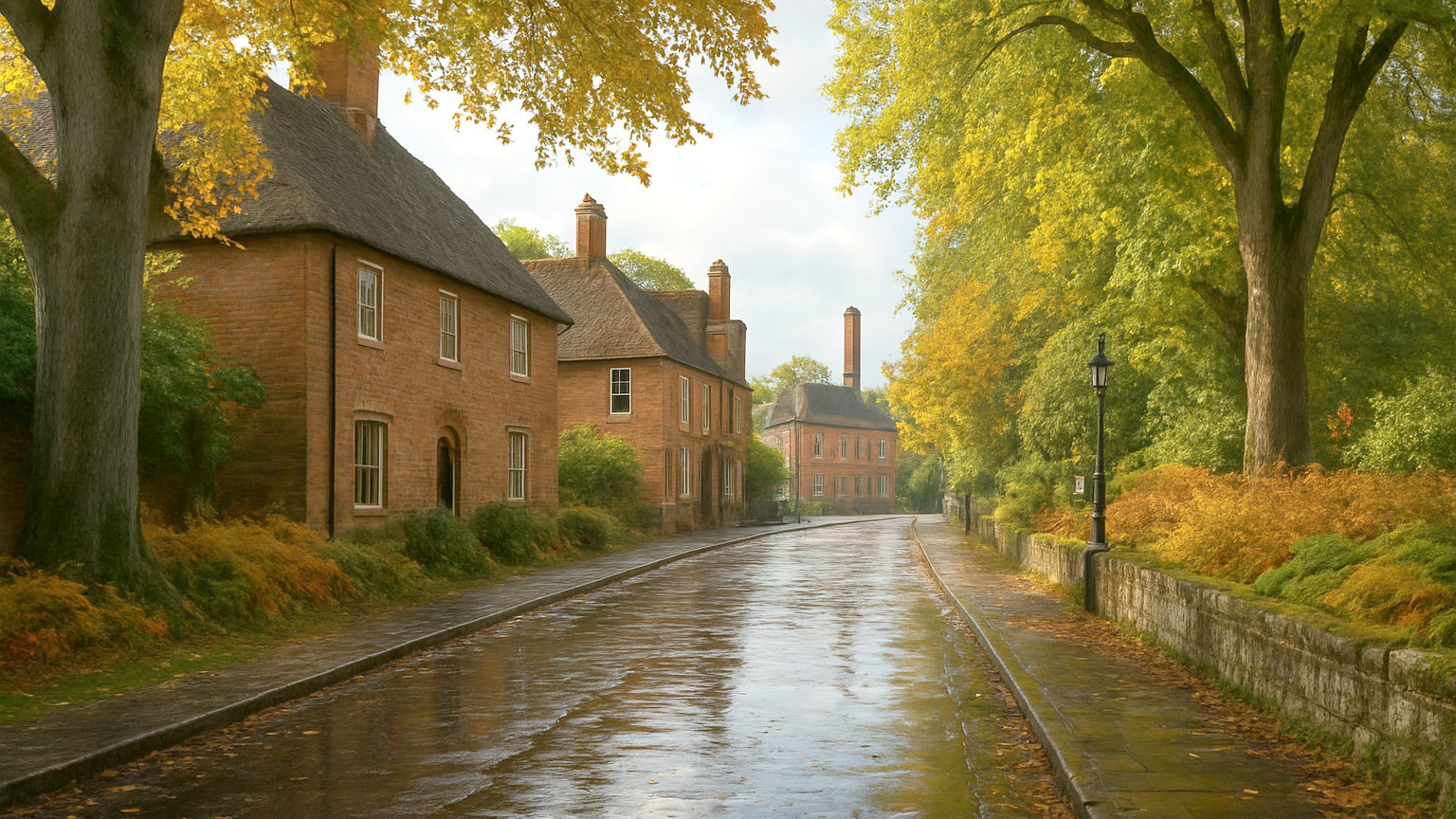
The largest cathedral close in Britain, walled and gated, holding houses from the fourteenth to the eighteenth centuries around a green.
Mompesson House and the museum are both open, and the museum holds important prehistoric material from the surrounding landscape.
What is Old Sarum?
The Iron Age hillfort two miles north where the Normans built a castle and the first cathedral, abandoned in the thirteenth century for the valley site.
The foundations are laid out in the turf and the view from the ramparts to the modern spire explains the whole story.
Does it charge?
Arrangements have changed in recent years between charging and requesting a donation, so check the cathedral's own site before travelling.
The tower tour is always ticketed separately and books ahead in summer.
What is the water meadow walk?
A path across the meadows south west of the city giving the view that a well known landscape painter recorded repeatedly in the 1820s.
It takes around forty minutes and is at its best in early morning mist or late afternoon light.
How long do you need?
Two hours for the cathedral and chapter house, three with the tower tour, and half a day if you add Old Sarum or the close.
Stonehenge is eight miles away and the city is the obvious base for visiting it.
What about the exterior?
Because the cathedral stands alone in a large green rather than hemmed in by buildings, you can walk right round it and see the whole exterior, which is impossible at most English cathedrals. The west front carries tiers of statues, most of them Victorian replacements, and the proportions are best appreciated from the north east corner of the green.