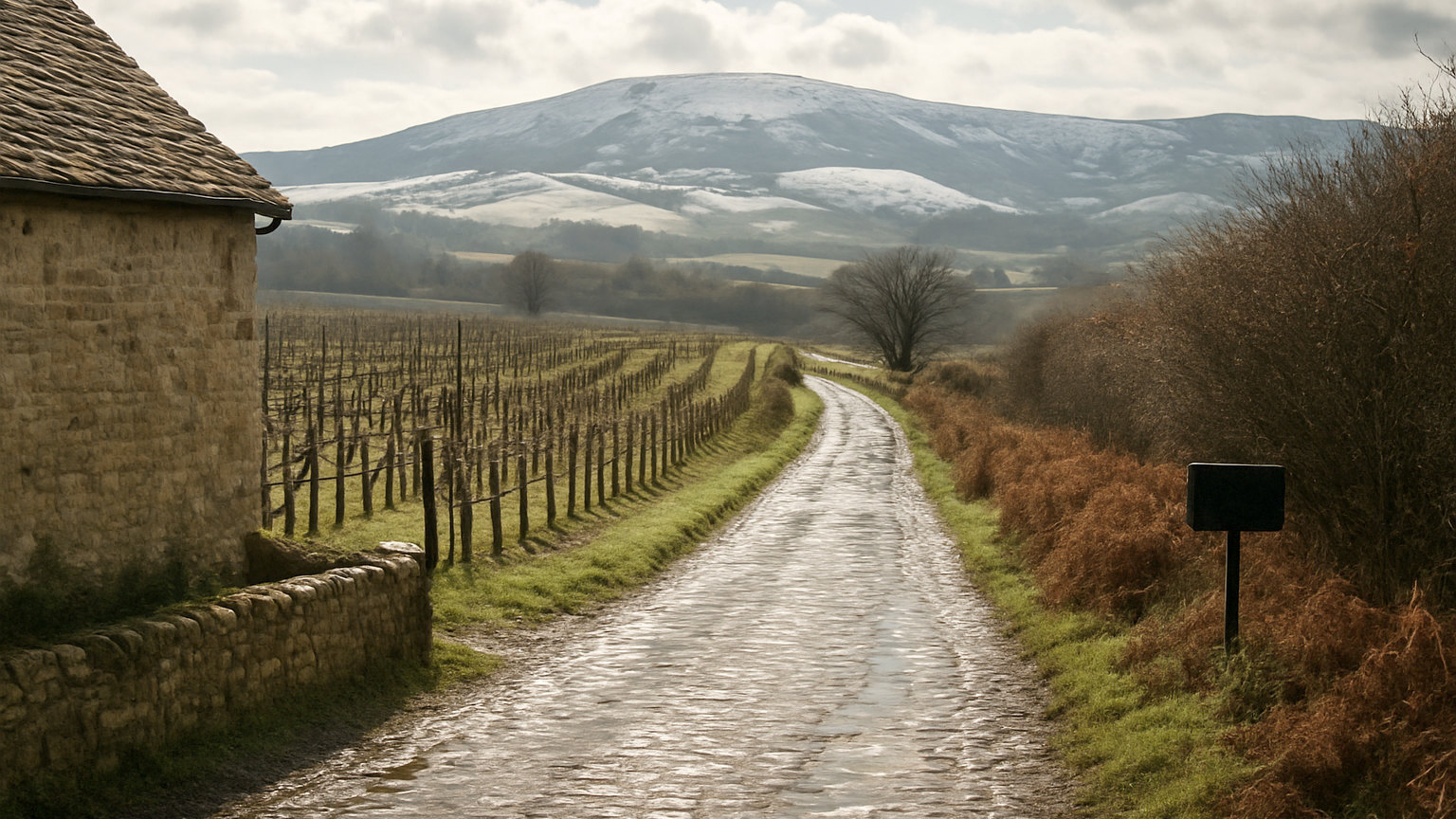
British wine has moved in thirty years from a joke to a serious industry, with English sparkling wine winning blind tastings against champagne and vineyard acreage expanding rapidly. Several hundred vineyards now exist and a good number welcome visitors, mostly in the south.
Why does it work now?
Two reasons. The chalk soils of Sussex, Kent and Hampshire are geologically the same formation as those of the Champagne region, running under the Channel and surfacing again in southern England.
And a warming climate has made ripening reliable enough for commercial production. The classic champagne grapes of chardonnay, pinot noir and pinot meunier now ripen consistently in southern England.
Where are the vineyards?
Concentrated in Sussex, Kent, Hampshire and Surrey, with substantial plantings in Essex, Dorset and the Thames Valley. Cornwall has vineyards producing well regarded sparkling wine.
Wales has a scattering, mostly small. Vineyards now exist as far north as Yorkshire and there are a handful in Scotland, though the industry remains overwhelmingly southern.
What does a tour involve?
Typically a walk through the vines with an explanation of the varieties and the growing year, then the winery to see pressing, tanks and the bottle ageing hall, finishing with a tasting of three or four wines.
Sparkling wine production involves a second fermentation in the bottle followed by years of ageing on the lees, and the cellars full of bottles are frequently the most striking part of a visit.
When should you go?
May to October, when the vines are in leaf and tours run regularly. Many vineyards close to visitors over winter or offer indoor tastings only.
Harvest, usually in October, is the most interesting time and several places offer harvest experiences, though it is also the busiest period for the staff and tours may be curtailed.
What should you expect to taste?
Sparkling wine above all, which is what Britain does best. Still whites from bacchus and other varieties, which have improved substantially. Still reds, which remain the hardest to make well here.
Prices reflect small scale production and English labour costs, so British sparkling wine is not a cheap purchase. It compares with mid range champagne rather than prosecco.
How does it compare with champagne?
Favourably at the top end, which is no longer a controversial claim. English sparkling wines have won blind tastings against champagne repeatedly, and several champagne houses have bought land and planted in Kent and Hampshire.
The style tends to be brighter and higher in acidity, which some drinkers prefer and others find austere.
Can you get there without driving?
Some vineyards are reachable by train, particularly in Sussex and Kent where the network is good, and several offer collection from a nearby station.
Otherwise a designated driver or a tour operator is necessary, since tastings are a substantial part of the visit. Several companies run minibus tours visiting two or three vineyards in a day.
Are they good for a day out?
Yes, and increasingly they are set up for it, with restaurants, terraces and events rather than only tours. Several are attractive places to spend an afternoon regardless of interest in wine.
Booking is necessary, since tours have limited capacity and popular vineyards fill at weekends through the summer.
What else is worth knowing?
The industry is young enough that most vineyards are owner run and the person showing you round frequently planted the vines. That access is unusual and makes the tours more interesting than at larger established regions abroad.
Buy at the vineyard if you like something, since distribution is limited and many wines are difficult to find elsewhere.
Is there anything beyond wine?
Several vineyards now operate as broader destinations, with restaurants using produce from the estate, walking trails between the vines, art installations and outdoor events through the summer. A few have accommodation. For a group where not everyone is interested in wine, choosing a vineyard with a good restaurant and a view solves the problem neatly.