Southampton is a major port that was heavily bombed and rebuilt, and its history is bound up with two things above all: the ships that sailed from it and the aircraft designed in it. Both are well covered, and the medieval town survives more completely than visitors expect.
What is SeaCity Museum?
A museum in the former magistrates' court covering the port and, principally, the Titanic, which sailed from Southampton in 1912.
It tells the story from the city's perspective rather than the passengers', because the great majority of the crew were local. More than five hundred Southampton households lost someone, and the museum handles that with appropriate seriousness.
What is Solent Sky?
An aviation museum covering the Spitfire, which was designed in Southampton and first flew from the airfield here, along with flying boats that once operated transatlantic services from the water.
It holds a Sandringham flying boat you can board, which is the highlight, and a Spitfire among other aircraft.
What is Tudor House?
A timber framed merchant's house of the late fifteenth century in the old town, restored and open, with a Tudor knot garden and a Norman house in the grounds.
It covers eight hundred years of occupation on one site and is the best surviving domestic building in the city.
What about the walls?
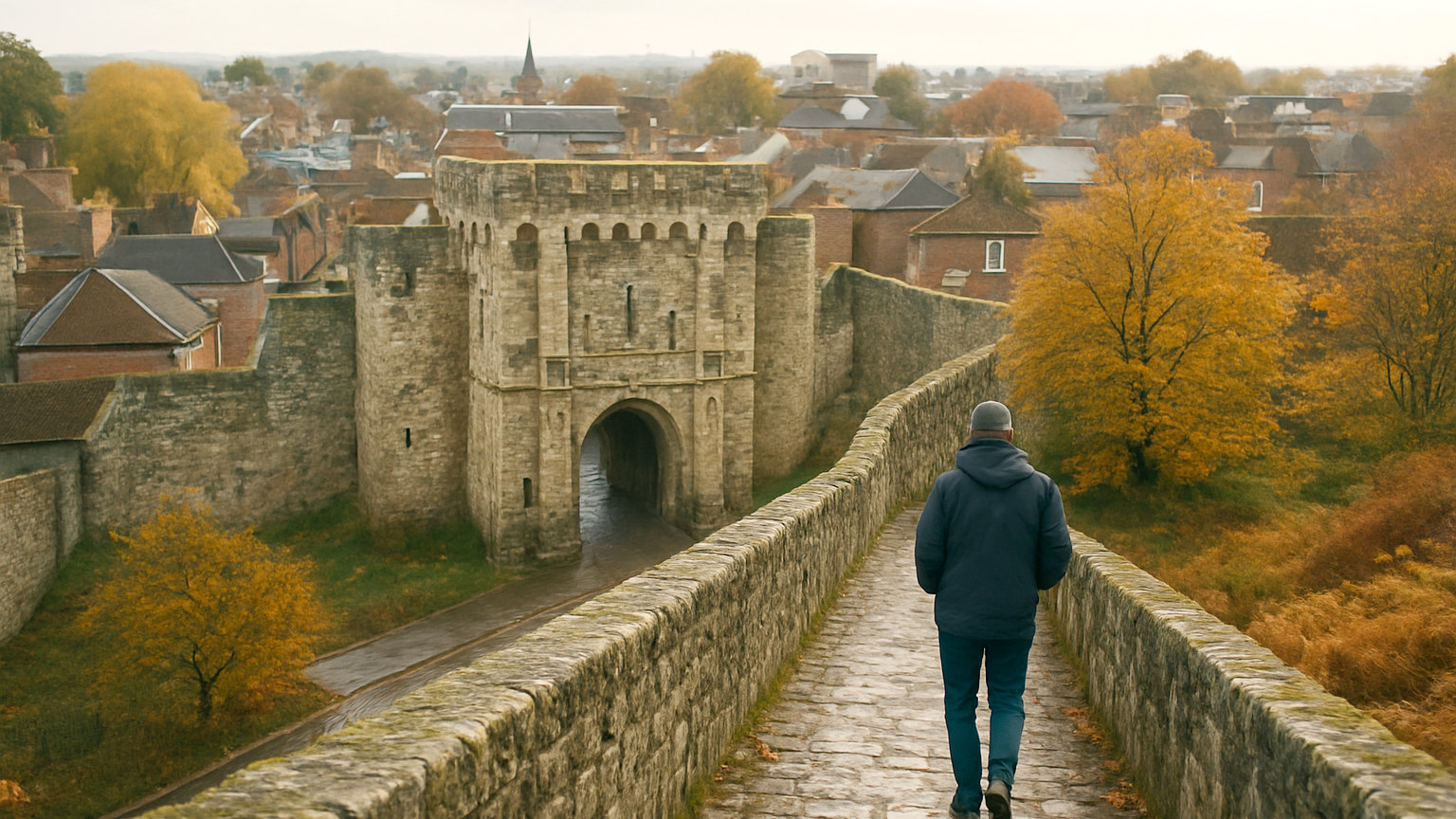
Southampton retains a substantial proportion of its medieval town walls, among the most complete in England, with towers, gates and vaults, and a marked walk following them.
Bargate, the main northern gateway, stands in the middle of the shopping area, which is an odd and effective juxtaposition.
What is God's House Tower?
A medieval gunpowder store and gate at the southern corner of the walls, now an arts venue and cafe, which is among the earliest purpose built artillery fortifications in the country.
It gives access to a section of wall and a view over the water.
Is there an art gallery?
Southampton City Art Gallery, free, holding a nationally important collection strong in twentieth century British art, in the civic centre.
It is consistently overlooked by visitors, who assume a port city has nothing of the kind.
What is the Mayflower connection?
The ship sailed from Southampton in 1620 before putting in at Plymouth for repairs, and a memorial stands on the waterfront.
The city has a reasonable claim to the departure that Plymouth is better known for, which locals will explain at length.
What about the cruise port?
Southampton is the busiest cruise port in northern Europe, and very large ships are visible from the waterfront and from Mayflower Park.
Ship spotting is a genuine local activity, and departure days can be watched from the shore for nothing.
What is nearby?
The New Forest, whose eastern edge is fifteen minutes away, and Winchester half an hour north. The Isle of Wight by ferry from the terminal.
Beaulieu and Buckler's Hard on the far side of the water, and Portsmouth twenty minutes east by train.
How do you get there?
By train from London Waterloo in around eighty minutes, with the airport on a separate station on the same line.
The city is a transport hub rather than a destination for most people, which is why so much of it goes unseen.
How long do you need?
A full day covers SeaCity, the walls and Tudor House. Two nights allows Solent Sky and a day in the New Forest.
It works better as a base than as a destination, being well placed for Winchester, the Forest and the Isle of Wight.
What about the old town walk?
A marked route follows the surviving walls from Bargate down to the water, passing towers, vaults, the Tudor merchants' houses and the medieval quay. It takes around an hour, costs nothing and is the best way to see what survived the bombing. Interpretation panels along the way explain the gaps as well as the buildings.