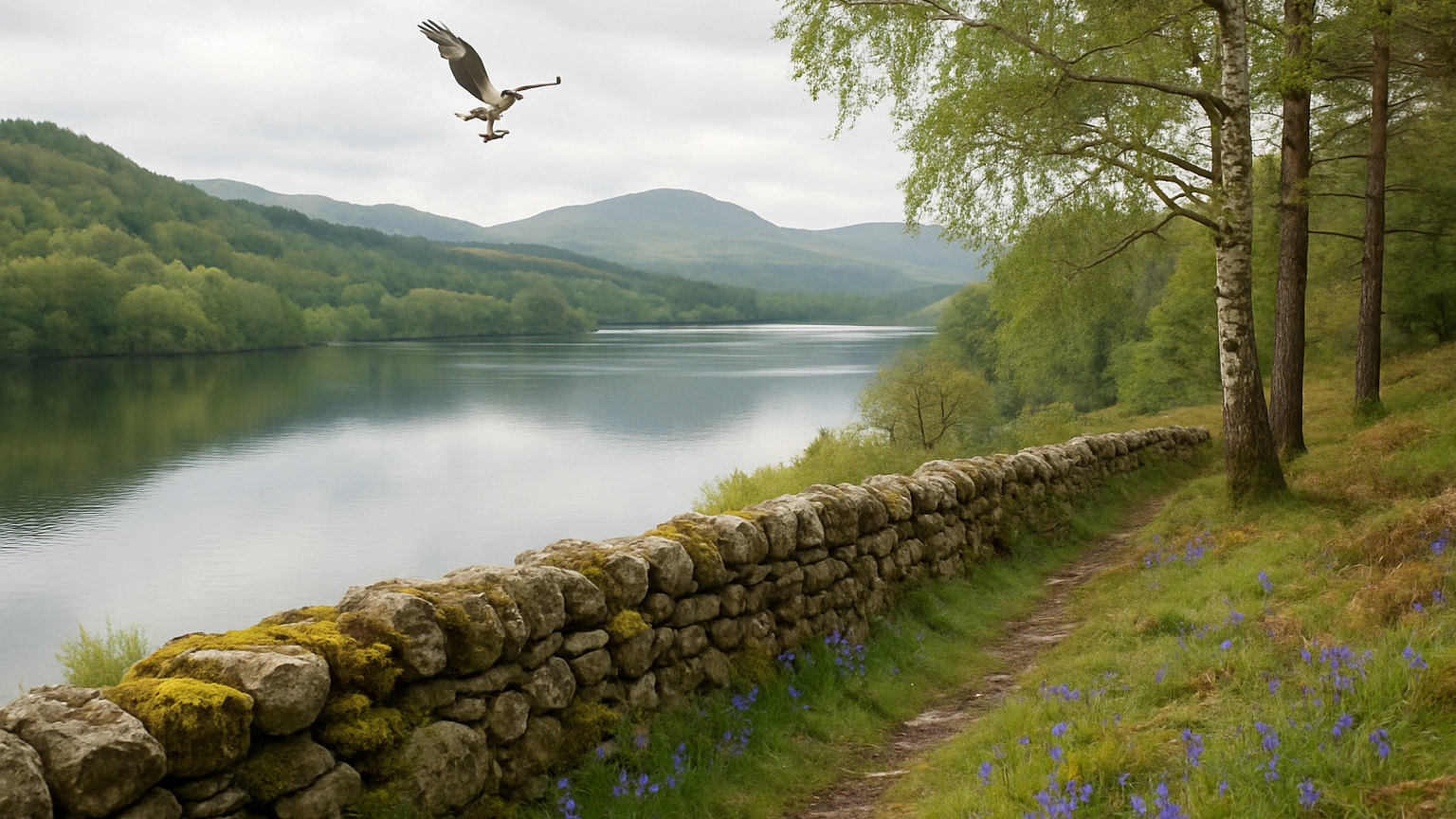
The osprey was persecuted to extinction as a breeding bird in Britain by the early twentieth century. Its return, first through natural recolonisation in Scotland and later through translocation projects in England and Wales, is among the more visible conservation successes of recent decades.
When are they here?
Ospreys are summer migrants, wintering in West Africa. Birds arrive from late March into April and depart from late August through September.
Males typically arrive first and reclaim the previous year's nest. There is nothing to see between October and March, so a visit outside the season is wasted.
Where can you watch them?
Several sites have established viewing facilities with telescopes, cameras and staff. In Scotland, the Loch of the Lowes in Perthshire and sites in Strathspey and around the Cairngorms.
In England, Rutland Water in the east midlands, where the English population was re established, and Kielder in Northumberland. In Wales, the Dyfi and Glaslyn projects in the north and west.
What will you actually see?
Usually a bird on a nest at some distance, viewed through a telescope, plus a live camera feed showing the nest in detail. Adults come and go with fish, and chicks are visible from around June.
The spectacle people hope for is a fishing dive, where the bird hovers and drops feet first into the water. That requires luck and a viewpoint over water rather than the nest.
Where can you see them fishing?
Several places arrange it. Trout fisheries in Scotland and northern England have built hides specifically for photographers, where ospreys fish regularly and sessions are booked in advance.
Otherwise, watching a loch or reservoir with a known nest nearby in early morning gives a reasonable chance, particularly when adults are feeding chicks in June and July.
When during the season is best?
June and July, when chicks are in the nest and adults are fishing constantly to feed them. Activity is highest and the birds are most predictable.
April is interesting for arrival, courtship and nest building, and late August offers the chance of seeing juveniles practising before migration.
What should you take?
Binoculars at minimum and ideally a telescope, though most established sites provide scopes and volunteers to set them up. Patience, since a bird may sit on a nest for an hour without moving.
Warm clothing, as osprey watching involves standing still by water, frequently in wind.
Can you watch them online?
Yes, and it has become a substantial part of how people follow them. Most projects run live nest cameras through the season with commentary, and several ring and satellite tag birds so individuals can be followed on migration.
Watching the camera before visiting tells you exactly what stage the nest has reached, which is worth doing.
Why does the location of nests matter?
Because ospreys were persecuted and egg collecting was a serious threat during the early years of recolonisation. Nest sites were guarded around the clock, and some still are.
Established public sites are safe to visit and publicised. Do not publicise the location of an unadvertised nest you happen to find, and report it to the relevant conservation body instead.
Are they spreading?
Slowly and steadily. The Scottish population has grown considerably and birds now breed in parts of England and Wales where they were absent for centuries, with occasional nests appearing in new areas each year.
Passage birds also turn up at reservoirs and estuaries across the country during migration in spring and autumn, so a sighting well away from any known nest is entirely possible in April or September.
One practical note on timing within the day. Ospreys fish most actively in the early morning and again in the evening, so a visit built around the middle of the day is likely to show you a bird sitting still. Arriving at opening, or staying until the site closes, materially improves what you see.