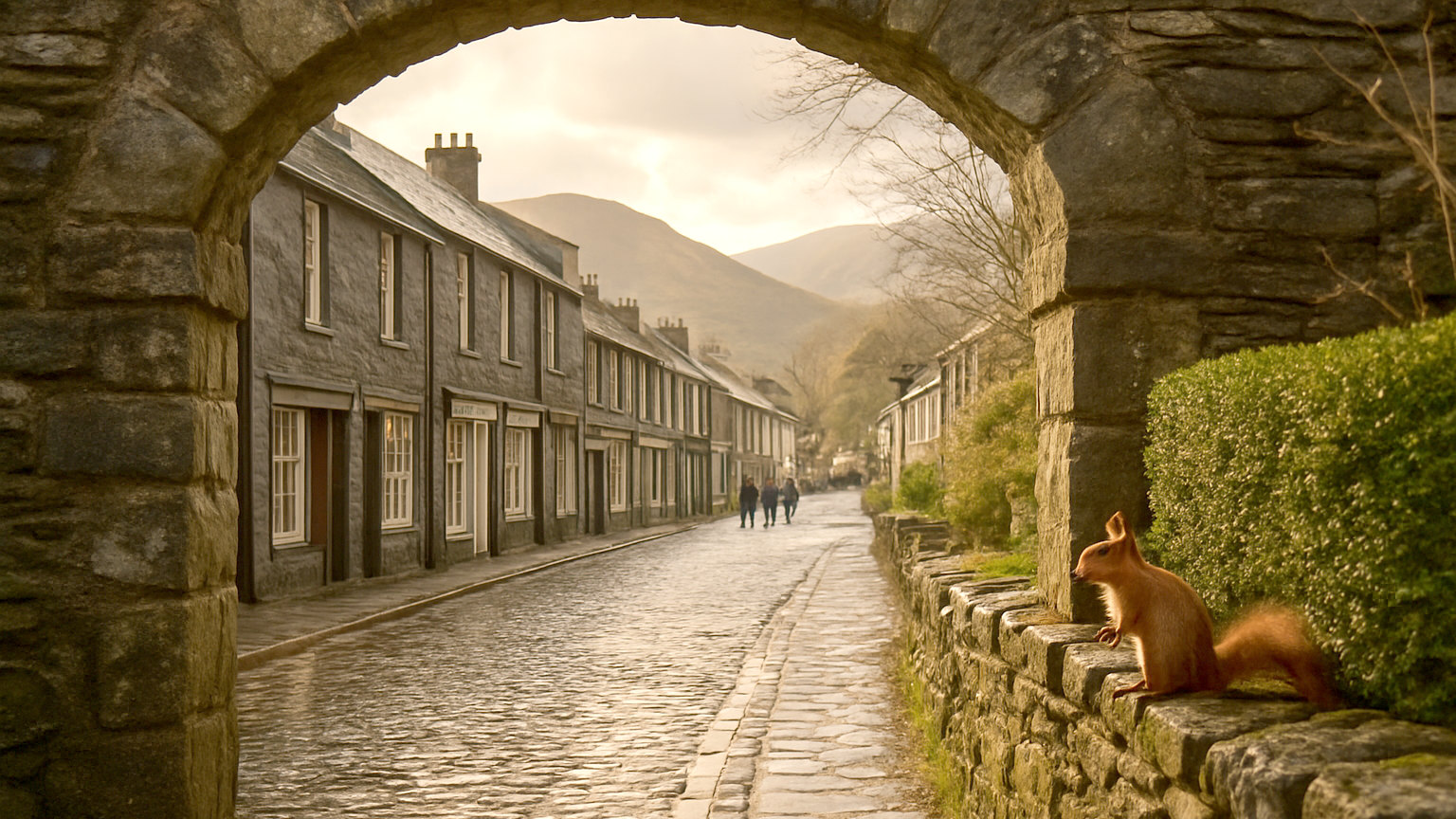
The red squirrel was once found throughout Britain and is now confined to a scattering of strongholds, most of them in Scotland and the north of England. Seeing one is entirely achievable if you go to the right place at the right time of day, and essentially impossible across most of southern England.
Why did they disappear?
Grey squirrels, introduced from North America in the nineteenth century, outcompete them for food and carry squirrelpox, a virus which greys tolerate and which is usually fatal to reds. Where the two species meet, reds are generally displaced within a couple of decades.
Habitat loss played a part historically, but the grey squirrel is the decisive factor, which is why conservation effort focuses so heavily on controlling their spread into red strongholds.
Where do they survive?
Scotland holds the large majority of the British population, particularly in the Highlands, Aberdeenshire, Dumfries and Galloway and the Borders. Northumberland, especially the Kielder area, is the English stronghold.
Smaller populations hold on in Cumbria, on Anglesey following a long reintroduction effort, on the Isle of Wight, on Brownsea Island in Poole Harbour and at Formby on the Merseyside coast.
Which sites give the best chance?
Brownsea Island is among the most reliable in England, being free of greys and small enough that sightings are common. Formby has a well established population in pine woods behind the dunes.
In Scotland, the pine forests of Strathspey around Aviemore, including Rothiemurchus and Abernethy, are excellent. Several sites operate feeding stations with hides, which greatly improve the odds.
When should you look?
Early morning is best, particularly within the first two hours after sunrise, with a second period of activity in late afternoon. They are inactive in the middle of the day and in poor weather.
Autumn is the most productive season, when squirrels are caching food and moving constantly. They do not truly hibernate, so winter sightings are possible, though they stay in the drey during storms.
How should you look for them?
Listen rather than scan. The sound of a squirrel is usually the first sign: claws on bark, the rustle of a branch, or fragments of cone falling. Look for stripped cones on the woodland floor, which show recent feeding.
Stand still near a feeding station or a known tree and wait. Movement drives them into cover, and most people give up before the squirrel has decided they are harmless.
How do you tell them from greys?
Size and ear tufts. Reds are noticeably smaller and slimmer, with prominent ear tufts in winter and a rich chestnut coat, though the colour varies to almost black in some Scottish populations.
Greys are larger, greyer and heavier looking, and lack the tufts. A grey squirrel with a reddish tinge along its back is common and frequently misidentified.
Can you help them?
Several conservation groups run monitoring and grey control programmes and rely on sightings reported by the public. Reporting a red or a grey in a stronghold area contributes usefully to that work.
Feeding is more complicated than it looks, since feeders can spread disease if not cleaned and can attract greys into red areas. Follow local guidance rather than putting out food independently.
What should you take?
Binoculars, patience and warm clothing, since watching involves standing still. A camera with a decent zoom, though photographs are difficult in woodland light.
Go on a still day if possible, since wind makes the woodland noisy and squirrels harder to detect by sound.
Is it worth planning a trip around?
For most people, no, and it works better as part of a wider visit to a forest or island where they occur. Brownsea combines with Poole Harbour, Formby with the Sefton coast, and Strathspey with the Cairngorms.
Treat a sighting as a strong probability rather than a certainty. Even at the best sites they are wild animals in dense woodland, and an hour of quiet waiting is frequently what separates a sighting from a walk.