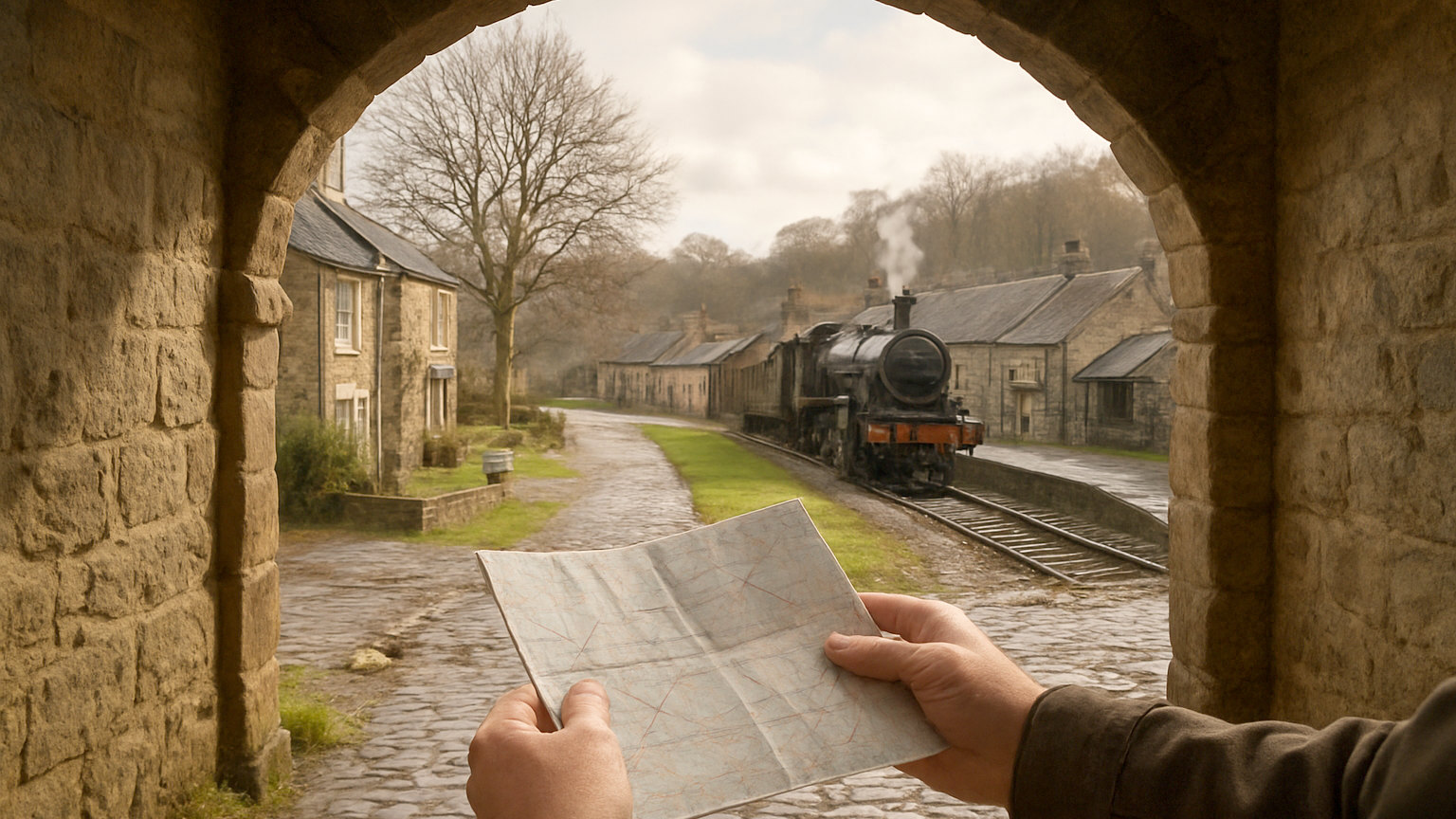
Britain's preserved railways are among the most filmed locations in the country, because they supply something almost impossible to recreate: a working period station with genuine steam locomotives, staff who know how to operate them and no modern intrusions.
Which stations appear most?
Goathland on the North Yorkshire Moors Railway, a moorland station that has served both a long running television series and major film production, and which is reached by road or by preserved train.
Oakworth on the Keighley and Worth Valley Railway, used for a well known film adaptation of a children's novel and preserved in its period condition with gas lighting.
Which other lines are used?
The Bluebell Railway in Sussex, the Severn Valley in Shropshire and Worcestershire, the Great Central in Leicestershire and the Kent and East Sussex, all of which have period stations and rolling stock.
In Scotland, the Bo'ness and Kinneil Railway, which has a substantial collection and is used regularly.
What about viaducts?
Glenfinnan on the West Highland Line, a curving concrete viaduct above a loch, crossed by a summer steam service and among the most photographed structures in Scotland.
Ribblehead on the Settle to Carlisle line, and Harringworth in the east midlands, the longest masonry viaduct in Britain.
Why are preserved railways used?
Because they can close to the public for a day, provide period vehicles and trained crews, and have station buildings, signalling and infrastructure of the right era already in place.
They also need the income, and filming fees are a meaningful part of funding restoration work.
Can you travel on them?
Yes, and that is the point. These are operating railways with published timetables running through good country, and riding one is a better experience than looking at the station.
Rover tickets allowing unlimited travel for a day are usually better value than singles.
When do they run?
Mostly spring to autumn, with reduced winter services and special operations at Christmas. Some run daily in summer and only at weekends in shoulder months.
Check the timetable for your specific dates and whether services are steam or diesel, since lines alternate.
What about the main line?
The summer steam service over Glenfinnan is a scheduled operation on the national network, booked separately from ordinary tickets and selling out well ahead.
The ordinary scheduled train crosses the same viaduct several times a day for a normal fare, which is considerably cheaper and gives the same view.
How do you photograph the viaduct?
From the footpath above the visitor centre, arriving well before the train. Parking is limited, fills early and roadside parking is enforced.
Check the timetable rather than turning up hopefully, since the steam service runs at specific times and the gap between them is long.
What else is at these places?
Museums, workshops where restoration is visible, and in several cases dining trains. Goathland sits in the North York Moors with walking from the station.
Most preserved lines are volunteer run and several welcome new volunteers, which is an unusual way to spend a weekend.
Which should you visit?
The North Yorkshire Moors Railway for the length and the connection to Whitby, or the Keighley and Worth Valley for the preserved period stations and the Brontë connection in the same valley.
Both are working railways worth a day, which is the right reason to go.
What about tickets and timing?
Preserved lines run to published timetables that vary by month, and a station that looks busy with steam on one day is deserted on another. Check operating days before travelling, particularly outside summer. Rover tickets are usually better value than singles, and several lines offer combined tickets with nearby attractions.
What about walking from the stations?
Several of these lines run through good walking country and publish station to station routes, which is the best use of a preserved railway. Take the train out, walk back, and the day becomes something more than a ride. Goathland in particular sits in the North York Moors with paths in every direction.