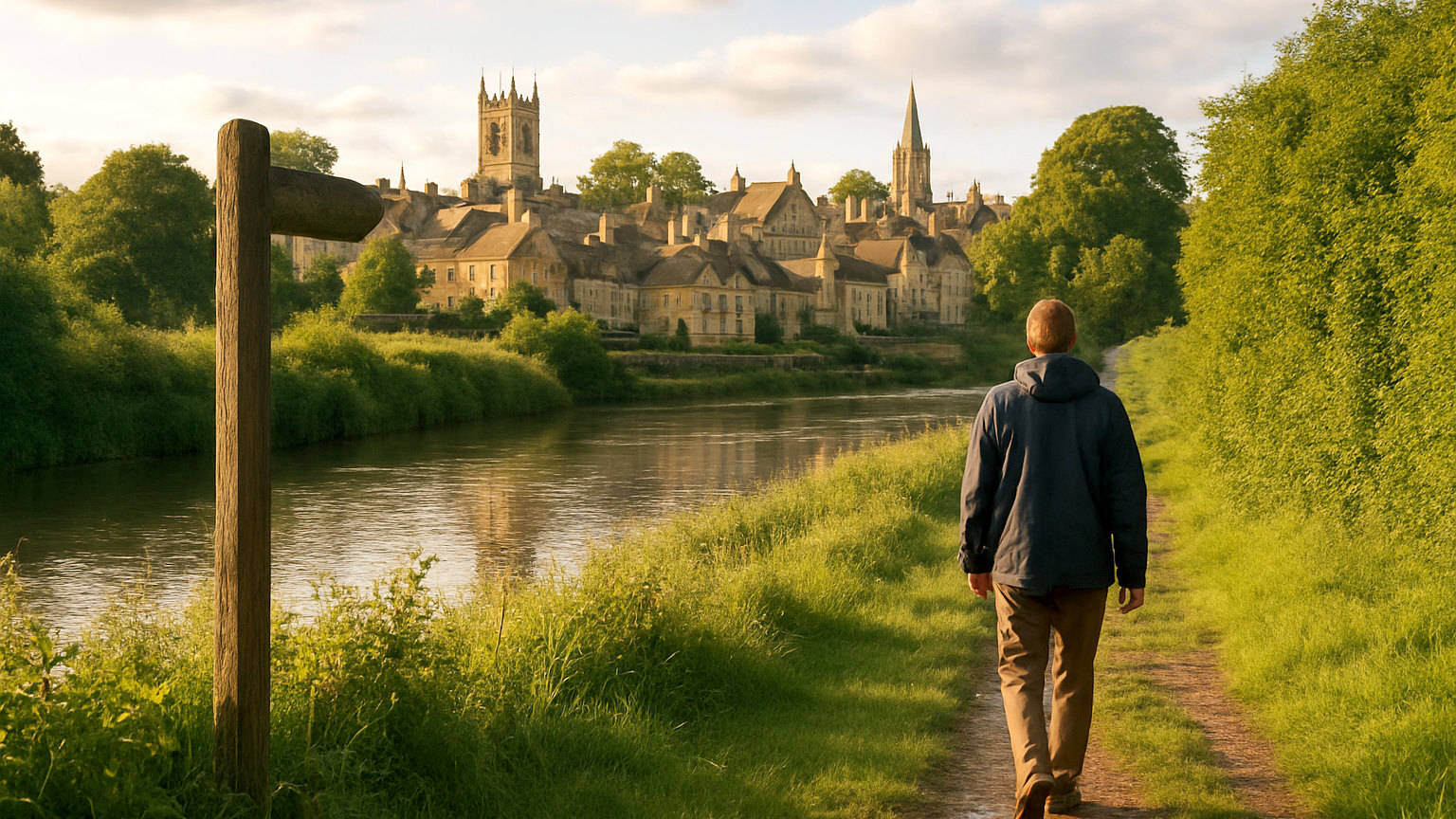
Stamford is a small Lincolnshire town built almost entirely of local limestone, with around six hundred listed buildings and five medieval churches within a few streets. It became the first conservation area in England in 1967, and the reason it survived is that the railway and the road both went elsewhere.
Why did it stay intact?
The town prospered on the wool and coaching trades and then declined when the main line railway was routed away from it, leaving no money to rebuild and no pressure to expand.
By the time prosperity returned, the buildings were valued. The same accident preserved a good many other English towns.
What is the architecture like?
Predominantly Georgian, in a warm grey limestone, with sash windows, pediments and a consistency that comes from everything being built from the same quarry over a couple of centuries.
Medieval buildings survive behind and beneath, and the street plan is older than the facades.
What about the churches?
Five medieval churches survive within the town, several with spires, which gives the skyline an unusual density for a place of this size.
All are worth entering, and the concentration reflects how wealthy the town was in the middle ages.
What is Burghley House?
An enormous Elizabethan house on the edge of the town, built by William Cecil, chief adviser to Elizabeth the First, and still occupied by his descendants.
The state rooms include painted ceilings covering entire walls, and the park was landscaped by Capability Brown. A sculpture garden and a garden of surprises adjoin it.
What happens at Burghley in September?
A major international horse trials, among the leading three day events in the world, held in the park over several days and drawing very large crowds.
Accommodation across the area fills, so check the dates before booking a quiet weekend.
What is the George?
A coaching inn on the Great North Road with a gallows sign spanning the street, which historically indicated to travellers that they were welcome, and courtyards behind.
It has operated as an inn for centuries and remains a hotel, and the sign is among the most photographed things in the town.
Is it used for filming?
Constantly. The absence of modern intrusion in whole streets makes it usable with minimal dressing, and it has stood in for several fictional and real towns in period productions.
Residents live with the consequences, so park in the car parks and keep off private steps and doorways.
What else is in the town?
Browne's Hospital, a fifteenth century almshouse with original glass, open on limited days. A Friday market and a monthly farmers market.
A good number of independent shops, several galleries and an unusually high concentration of pubs and restaurants for the size.
What is nearby?
Rutland Water fifteen minutes west, with ospreys in summer and wildfowl in winter, and a cycle route around it.
Oakham and Uppingham in Rutland, Peterborough with its cathedral to the east, and the Lincolnshire Wolds further north.
What about the open air theatre?
A long established company performs Shakespeare each summer in the grounds of a house a few miles from the town, with a covered auditorium and a wooded setting.
Performances run from June to August and book well ahead.
How do you get there?
By train from Peterborough in around fifteen minutes, connecting with fast services from London and the north, and from Leicester and Birmingham.
The town is small enough to walk entirely and the station is central.
How long do you need?
A day for the town and a second for Burghley, which deserves several hours between the house and the park.
It works well as a base for Rutland and the surrounding countryside, and accommodation is reasonable outside event weekends.
What is the stone?
Local limestone from quarries nearby, part of the same belt that runs from Dorset through the Cotswolds into Lincolnshire, which is why Stamford looks like a Cotswold town transplanted east. The colour is greyer here than in Gloucestershire, and the effect in low winter sun is the best time to see it.