Several British cities carry formal recognition for their literary life, awarded under an international designation, and a number of others have a claim without the label. In each case the interest is in what is actually there rather than the title.
Which cities hold the designation?
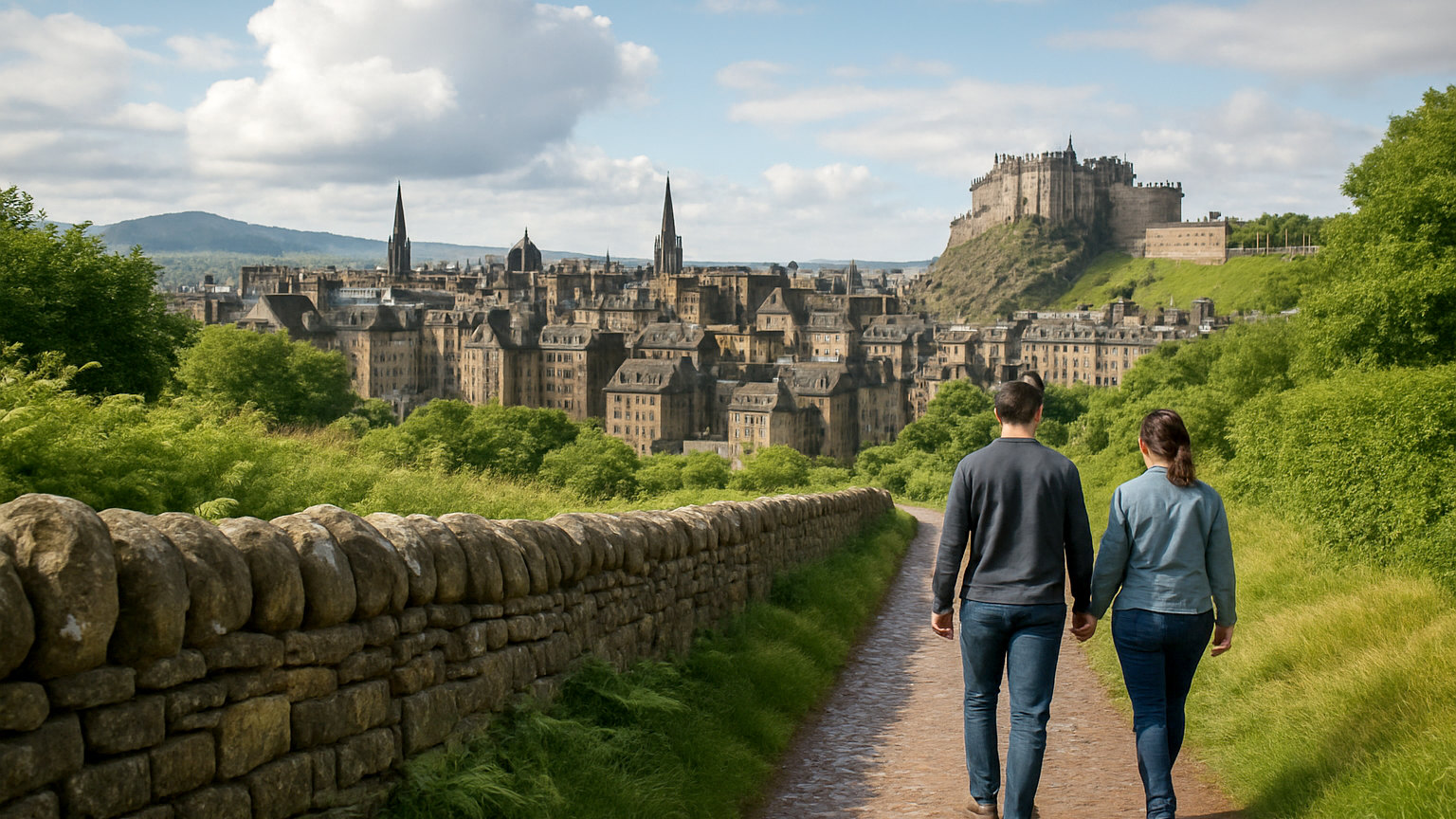
Edinburgh was the first city anywhere to be named a city of literature, and Norwich, Nottingham, Manchester and Exeter have subsequently joined the network.
The designation recognises publishing, libraries, festivals, education and a living literary culture rather than only historic associations.
What is there in Edinburgh?
The Writers' Museum in a seventeenth century close, dedicated to Burns, Scott and Stevenson. Makars' Court outside it, with quotations set into the paving.
The Scott Monument on Princes Street, the largest memorial to a writer anywhere. The National Library of Scotland, a major book festival each August, and a great many literary pubs and walking tours.
Why Norwich?
A long publishing and library history, including one of the first provincial libraries, and a major centre for literary translation. It has one of the country's best known creative writing programmes.
The medieval city itself is remarkably intact, with more surviving medieval churches than any city north of the Alps, which gives the literary heritage an unusually good setting.
What about Nottingham?
Associated with several major writers including D. H. Lawrence, whose birthplace at Eastwood outside the city is preserved and open.
The city has a strong contemporary writing and publishing scene, and the surrounding county holds Newstead Abbey, the Byron family seat.
What is in Manchester?
Chetham's Library, the oldest free public reference library in the English speaking world, where Marx and Engels worked, still functioning and open to visitors.
The Portico Library, the John Rylands Library in a spectacular neo Gothic building, and Elizabeth Gaskell's house, restored and open.
Which cities have a claim without the designation?
London obviously, with more literary associations than any comparable city. Oxford and Cambridge for their libraries, colleges and long list of resident writers.
Bath for its Georgian literary society, Bristol, Belfast, Cardiff and Swansea, all of which have substantial writing traditions and visitable sites.
What can you actually see?
Libraries, several of which are architecturally remarkable and free to enter. Writers' houses and museums. Statues, plaques and memorials, which in Edinburgh and London are everywhere once you start looking.
Independent bookshops, which cluster in these cities, and second hand dealers.
What about the libraries specifically?
The British Library holds a permanent free gallery displaying manuscripts of extraordinary importance. The national libraries of Scotland and Wales hold equivalent collections.
Several historic subscription and reference libraries welcome visitors, and university libraries frequently mount free exhibitions from their collections.
Are the festivals worth planning around?
Yes, and most of these cities hold at least one annual literary festival with author events, workshops and readings, usually inexpensive and open to anyone.
Programmes are published two or three months ahead and popular events sell out quickly.
Which should you choose?
Edinburgh for the density of material and the August festival, though the city is expensive and crowded then. Manchester for the libraries. Norwich for the setting.
All four reward a weekend, and in each case the literary sites sit within walking distance of one another.
What does the designation actually require?
Cities apply and are assessed on the strength of their publishing, libraries, education, festivals and support for writers, and membership commits them to continuing that work and to co operating internationally. It is not an award for historic associations, which is why several cities with famous literary pasts do not hold it while others with active contemporary scenes do.
A final point in favour of these cities: almost everything literary in them is free. Libraries, exhibitions, plaques, statues and public poetry cost nothing, and the paid attractions are small museums with modest admission. A literary weekend is among the cheapest city breaks available in Britain.