The Outer Hebrides, also called the Western Isles, form a chain around a hundred and thirty miles long off the north west coast of Scotland. They hold some of the finest beaches in Europe, a Neolithic stone circle older than Stonehenge, and the strongest surviving Gaelic culture in Scotland. They are also genuinely remote, and that shapes everything about a visit.
How is the chain arranged?
Lewis and Harris are a single island despite the names, divided by a range of hills, with Lewis flat and peaty in the north and Harris mountainous and rocky in the south. Stornoway on Lewis is the only town of any size.
South of Harris, ferries and causeways link Berneray, North Uist, Benbecula, South Uist and Eriskay in a continuous road, with a final ferry to Barra at the southern end. Driving the whole chain is possible in a long day and deserves several.
What are the beaches like?
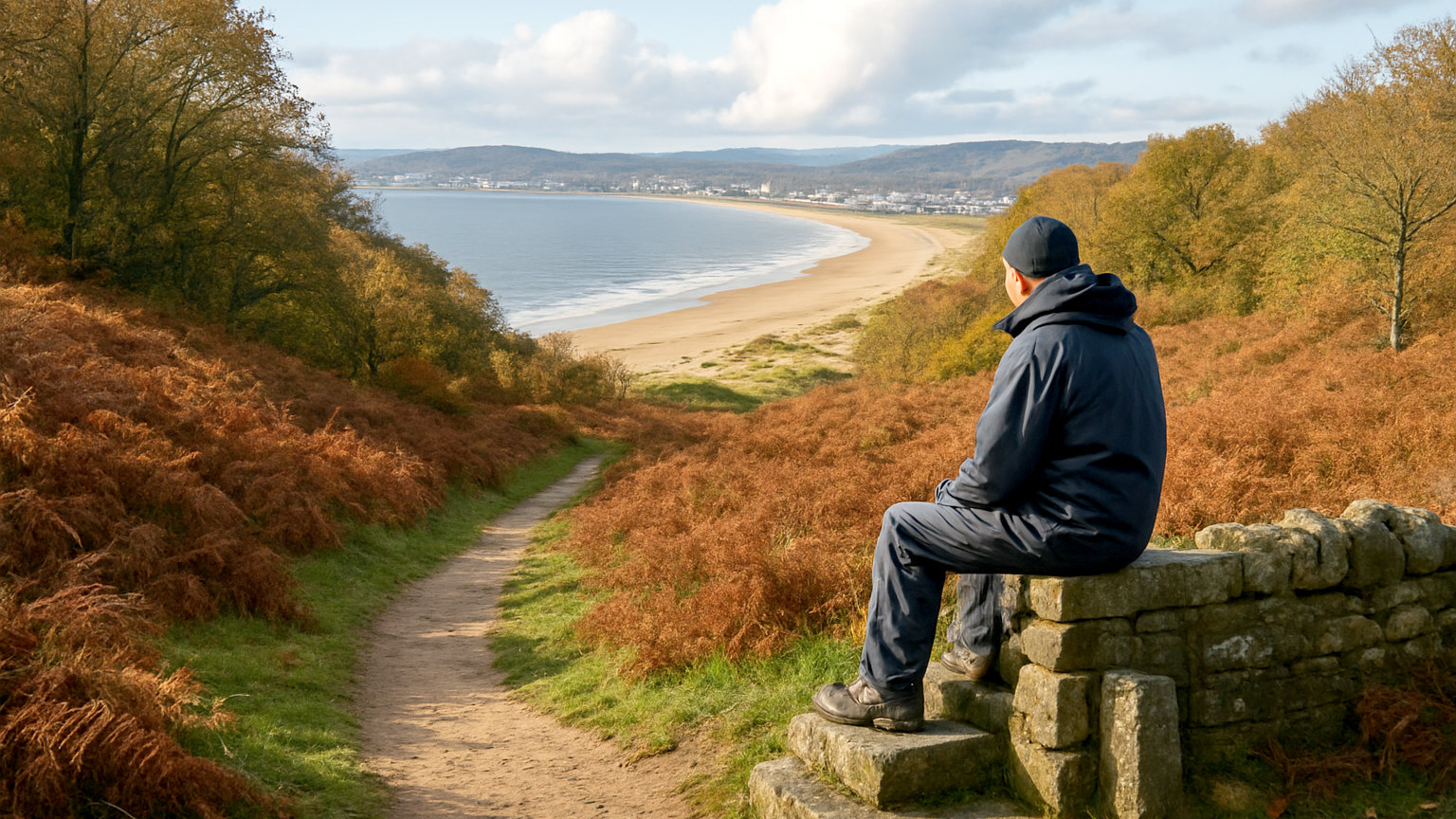
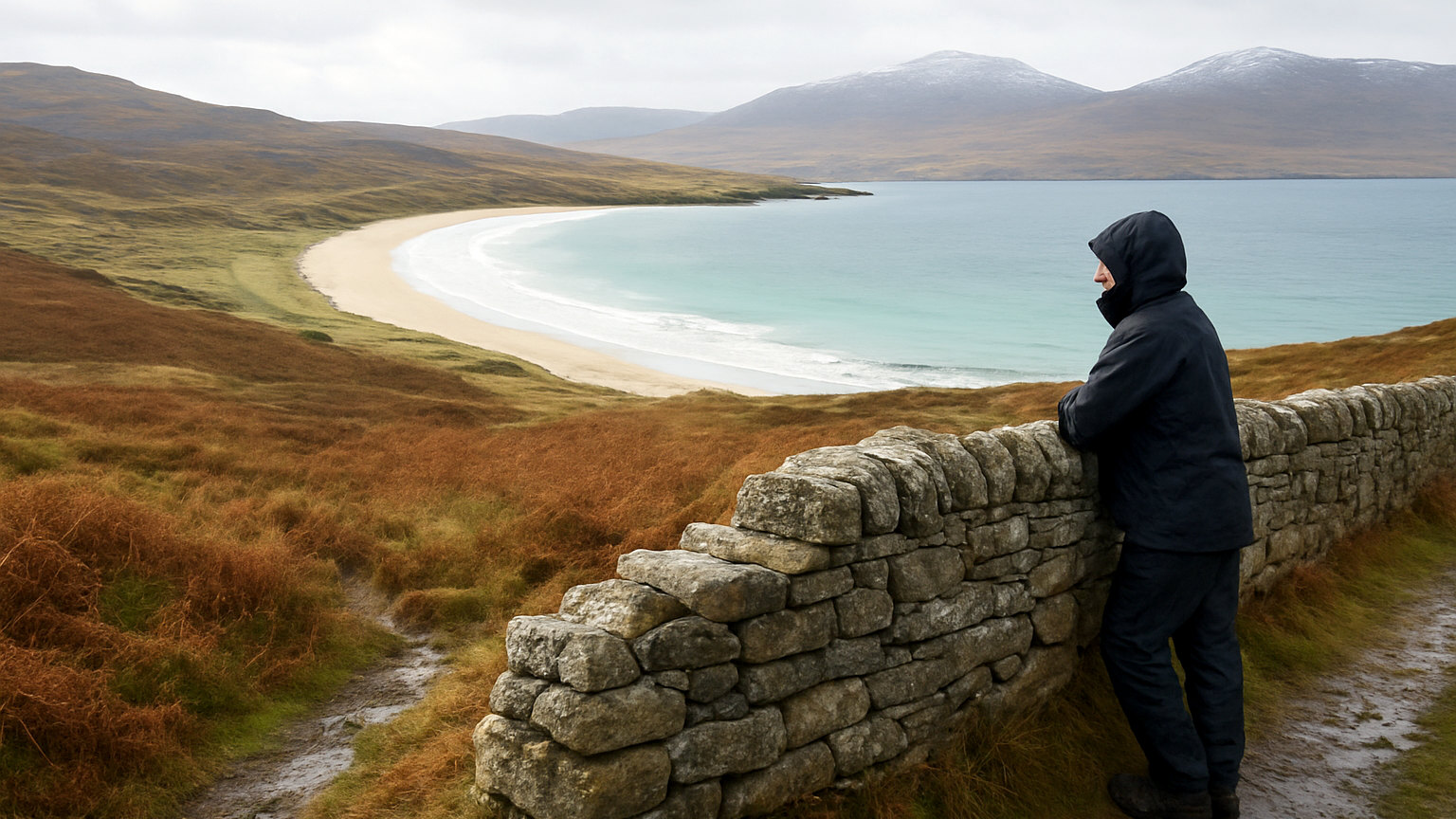
Extraordinary, and the single thing most visitors remember. Luskentyre and Seilebost on Harris are wide expanses of white shell sand against turquoise water, and on a sunny day they look tropical and are emphatically not, since the water is cold year round.
The west coasts of the Uists and Barra have similar beaches backed by machair, a rare flower rich grassland that grows on shell sand and blooms spectacularly in June and July.
What should you see beyond the beaches?
The Callanish standing stones on Lewis, a cross shaped setting of tall stones on a ridge above a loch, erected around five thousand years ago and far less visited than comparable sites on the mainland.
The blackhouse village at Gearrannan, the broch at Dun Carloway, the Harris Tweed weavers who still work to a legal definition requiring the cloth be handwoven in the islands, and the beach airport at Barra where scheduled flights land on the sand according to the tide.
What is Sunday like?
Quiet, particularly on Lewis and Harris, where Sabbath observance in the Presbyterian tradition remains strong. Many shops, petrol stations and cafes close, some ferries do not run, and public activity is limited.
This has relaxed somewhat and some services now operate, but visitors should plan for it: buy fuel and food on Saturday, and treat Sunday as a walking and beach day. It is a matter of genuine conviction for many residents and complaining about it is poorly received.
Is Gaelic still spoken?
Yes, more than anywhere else in Scotland. A substantial proportion of the population speaks it and it is used daily in homes, schools and broadcasting. Road signs are bilingual and in places Gaelic appears alone.
English is universally spoken and no visitor needs Gaelic. Hearing it used as an everyday working language, rather than as a heritage feature, is one of the distinctive things about being here.
How long do you need?
A week at minimum to do the chain justice, and ten days is better. Two or three nights on Lewis and Harris, two in the Uists and two on Barra gives a proper sense of how different they are from one another.
Accommodation is limited and books far ahead for summer. Vehicle spaces on the ferries from Ullapool, Skye and Oban need booking months in advance for July and August.
What should you be prepared for?
Wind, which is constant and shapes the treeless landscape. Single track roads with passing places on almost every route. Limited shops, few restaurants and no chains outside Stornoway. Midges in sheltered spots in summer, though the wind usually deals with them.
What you get in exchange is space, light and beaches that rival anywhere in Europe, with hardly anyone on them even in August.
How do you reach the chain?
Three main crossings serve the islands: Ullapool to Stornoway for Lewis, Uig on Skye to Tarbert on Harris or Lochmaddy on North Uist, and Oban to Castlebay on Barra. Flights run to Stornoway, Benbecula and Barra from Glasgow and Inverness. Many visitors enter at one end and leave from the other, which avoids retracing the whole chain and makes the trip a traverse rather than a return.