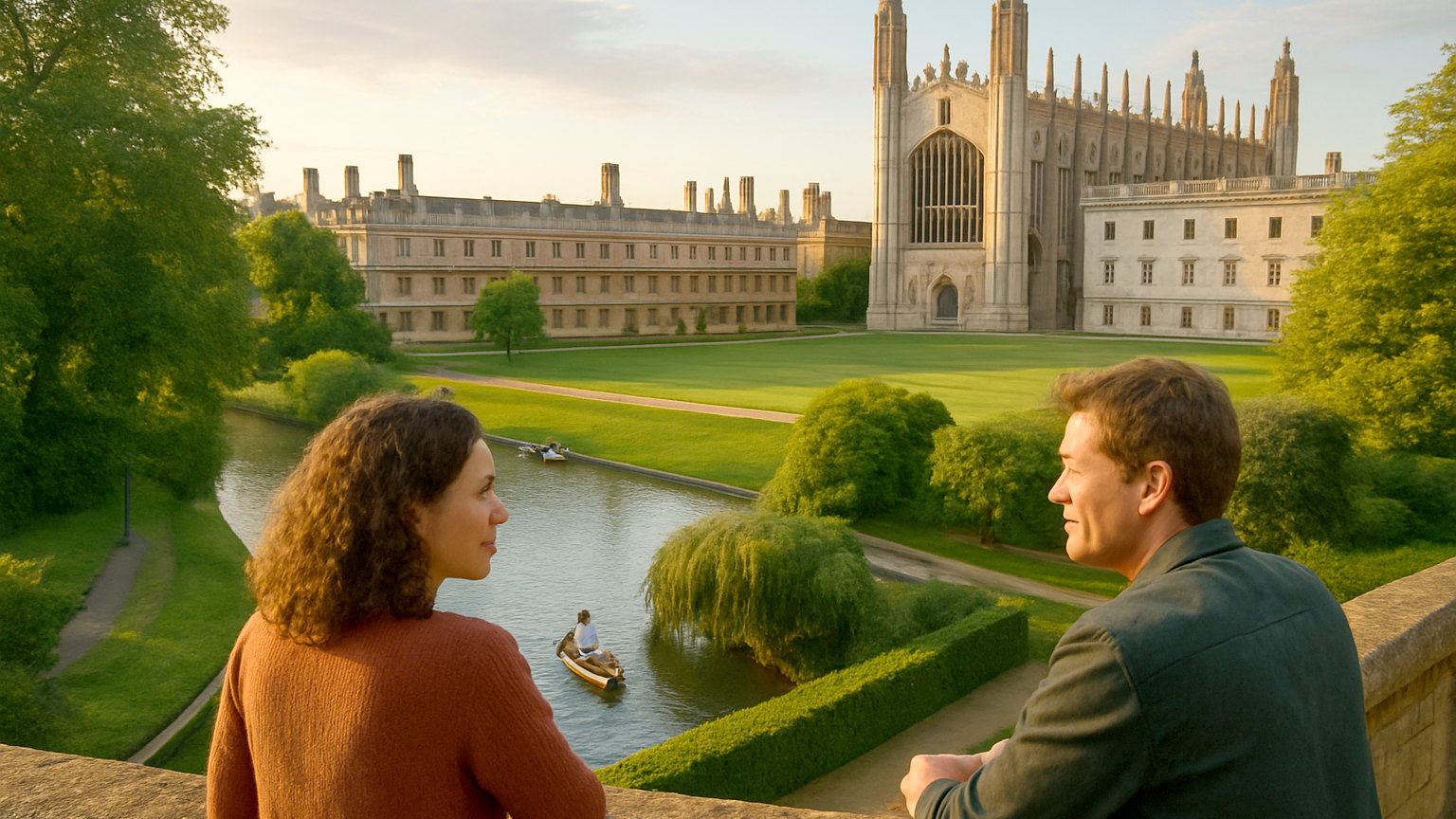
Cambridge is a small city built around a university founded in the thirteenth century, with thirty one colleges, several of them of considerable architectural importance, and a river running behind a row of them along a stretch known as the Backs.
What are the Backs?
The stretch of the Cam behind the older colleges, with lawns, willows and bridges, giving the view of King's, Clare, Trinity and St John's that defines the city.
It can be walked along a public path or seen from the water, and both are free apart from the boat.
What is King's College Chapel?
A late Gothic building with the largest fan vault in the world and a set of sixteenth century stained glass windows that survived the reformation and the civil war largely intact.
The choir is internationally known and a broadcast carol service each Christmas Eve draws a queue from early morning. Evensong during term is free and open to anyone.
Can you visit the colleges?
Some, at some times, usually for a fee, and access is restricted during examinations in late spring and during events. Several close to visitors entirely at times.
Check individual colleges rather than assuming. Students live and work in these buildings, and the courts are not public squares.
What is punting?
Propelling a flat bottomed boat with a pole from the platform at the back, which is harder than it looks and produces a good deal of entertainment for onlookers.
Self hire is cheaper and chauffeured trips include commentary. Both operate along the Backs and upstream to Grantchester.
Which museums are free?
The Fitzwilliam, a substantial collection of antiquities, paintings and manuscripts in a grand nineteenth century building. The Sedgwick for geology and the Museum of Zoology.
The Polar Museum, covering Arctic and Antarctic exploration, and the Museum of Archaeology and Anthropology. All are free and all are university museums.
What about the Botanic Garden?
Forty acres of planting a short walk from the centre, including a systematic beds area, glasshouses and a winter garden, charged for and worth it.
It is where Darwin's tutor developed ideas that influenced him, and it is the quietest green space in the city.
How do you get around?
On foot and by bicycle, which is how the city works. Cambridge has among the highest cycling rates in Britain and the centre is largely closed to cars.
Trains reach London in under an hour, and the station is a mile from the centre, which surprises people arriving with luggage.
How busy does it get?
Extremely, in summer, with large tour groups on the narrow central streets and punt touts along the river.
Early morning and out of term are considerably better. Winter weekdays are quiet and the colleges look their best in low light.
What is nearby?
Ely, with its cathedral rising above the fens, twenty minutes by train. The Fens themselves, flat, drained and strange. Wicken Fen, an undrained remnant, is a national nature reserve.
Grantchester, upstream, reachable by punt or on foot across the meadows.
How long do you need?
Two nights, or a long day trip from London. The city is small and the interest is concentrated, but the colleges reward slow walking.
Term time gives the city its atmosphere and restricts access; vacations give access and less life.
What about cycling?
The city has the highest cycling rate in Britain and visitors on foot should expect bicycles everywhere, including on streets that appear pedestrianised. Hire is widely available and is the most practical way to get about, though the city's cycling is fast and confident and is not the gentlest place to ride for the first time in years.
One final practicality: the station is a mile from the centre and the walk with luggage is dull. Buses and taxis run from outside, and the guided busway serves the wider area, which is worth knowing before setting off on foot.