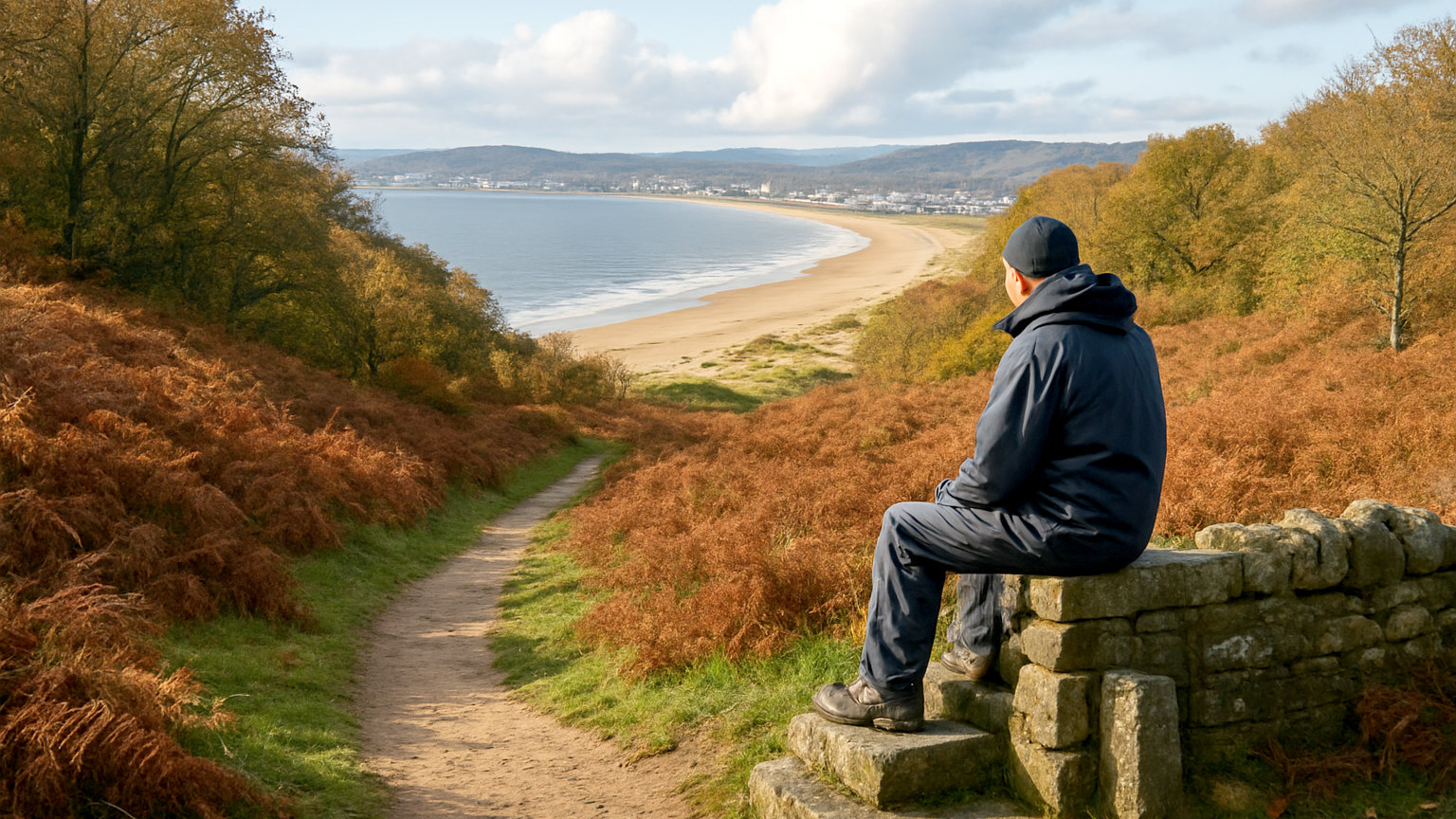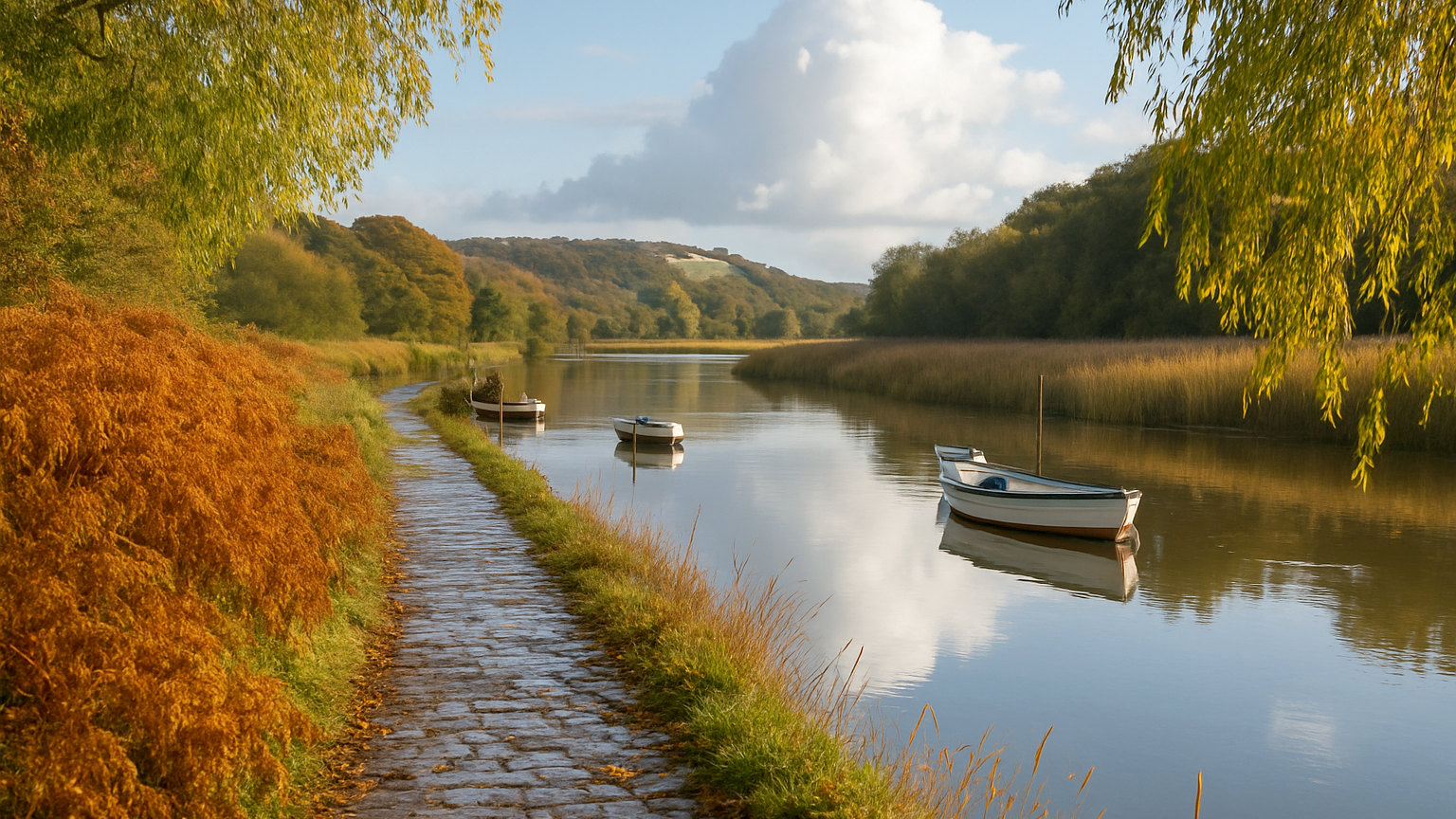
England does not produce the concentrated blaze of a New England autumn, because the native tree mix leans towards oak, beech and ash rather than maple. What it does produce is a longer, subtler season that runs for around six weeks and covers ancient woodland, parkland and arboretums planted specifically for the effect.
When does the colour actually peak?
Later than most people plan for. The main display in England runs from the middle of October to the middle of November, with the first week of November often the strongest in the south. September is too early almost everywhere.
Altitude and latitude shift this by a couple of weeks. Woodland in Cumbria and Northumberland turns earlier than woodland in Devon or Kent, and higher ground turns before the valleys below it.
What makes one autumn better than another?
Three conditions. A wet enough summer that the trees are not drought stressed and drop their leaves early, a sequence of cold nights without a hard frost to trigger the colour change, and calm weather so the leaves stay on the branches once they have turned.
A single severe gale can strip a wood in a day, which is why the best displays follow settled autumns. This also means the peak cannot be predicted far in advance, and booking flexible accommodation a week or two out beats committing in July.
Where are the best woodlands?
Westonbirt in Gloucestershire is the national arboretum and was planted with autumn in mind, with a large Japanese maple collection that produces the most intense colour in the country. It is deservedly popular and busy at weekends in late October.
The New Forest gives a very different experience: ancient beech and oak woodland over a large area, with ponies and deer, and enough space to escape other people. Bolderwood and the Ornamental Drive are the obvious starting points.
Which upland areas work well?
Borrowdale and Grizedale in the Lake District, where the oak and birch woods sit beneath fells and beside water, which doubles the effect through reflections. Grizedale in particular has waymarked trails through mixed woodland.
The Wye Valley on the Welsh border is among the best in Britain, with steep wooded slopes above the river and viewpoints at Symonds Yat and the Devil's Pulpit looking down onto the canopy rather than up into it.
What about parkland and gardens?
Stourhead in Wiltshire is designed around a lake with planting chosen for autumn reflection and is one of the most photographed autumn landscapes in England. Sheffield Park in Sussex works on the same principle with a series of lakes.
Many National Trust and Royal Horticultural Society properties publish colour updates through October, which is the most reliable way to time a visit, since they are reporting on what is actually happening rather than a historical average.
Where can you see it without a car?
The Wyre Forest near Kidderminster, Epping Forest on the edge of London, and the woods around Box Hill in Surrey are all reachable by train. Grizedale is served by seasonal buses from the Lake District towns, and the New Forest has several stations within the park boundary including Brockenhurst and Ashurst.
Within London itself, Kew Gardens, Richmond Park and Hampstead Heath all produce a respectable display and require nothing more than a tube or overground journey. Kew in particular has a substantial collection of non native trees chosen partly for autumn performance, which extends the season by a fortnight either side of what the native woodland manages.
How should you plan a trip around it?
Go midweek if you can, since the honeypot sites are considerably busier at weekends in the peak fortnight. Aim for the last ten days of October in the north and the first ten days of November in the south, then adjust based on the colour reports.
Early morning gives you low light through the canopy and mist in the valleys, which is when woodland photographs best. It also gets you into the car parks at Westonbirt and Stourhead before they fill, which by late morning on a fine October Saturday they reliably do.