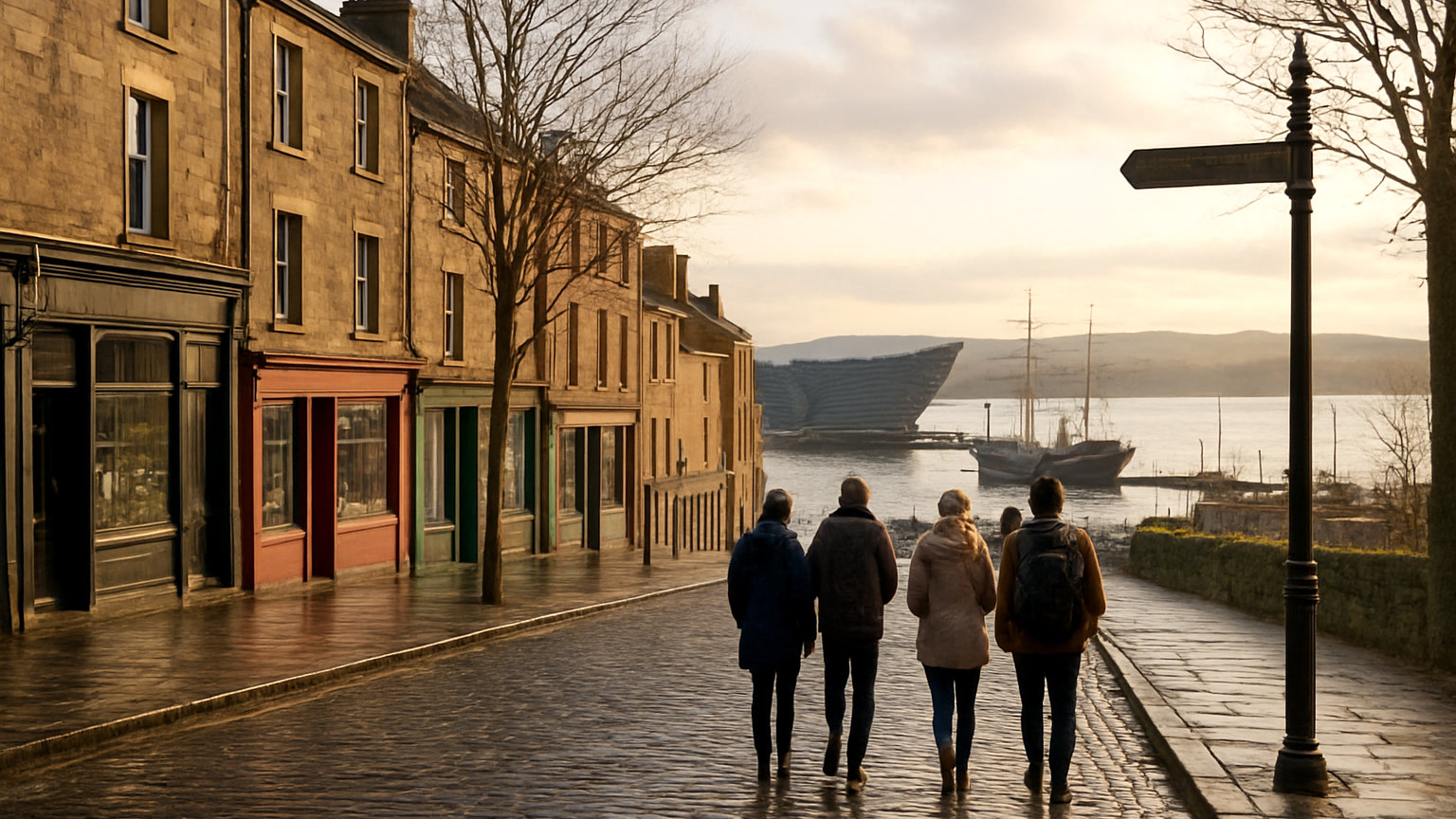
Dundee spent decades as a city people drove past and has rebuilt its waterfront around a major design museum, which has changed how it is regarded. It also has the best sunshine record of any Scottish city and sits on a wide estuary with hills behind it.
What is the design museum?
A branch of a national design collection, in a building of concrete slabs modelled on Scottish sea cliffs, standing on the waterfront beside the river.
It holds Scottish design across textiles, engineering, video games and architecture, including a reconstructed tea room interior by a celebrated Glasgow architect. Entry to the permanent galleries is free.
What are the ships?
The research vessel built in Dundee that carried a famous Antarctic expedition, preserved in a dock beside the design museum with a visitor centre explaining the voyage and the shipbuilding.
A restored frigate is moored nearby, one of the oldest British warships still afloat.
What was the city built on?
Jute, jam and journalism, as the local formulation has it. Jute spinning dominated the economy and employed enormous numbers, particularly women, and a preserved mill covers the industry and the lives of the people in it.
The publishing house that produced long running comics is still based in the city, and characters from them are commemorated with statues in the centre.
What is Broughty Ferry?
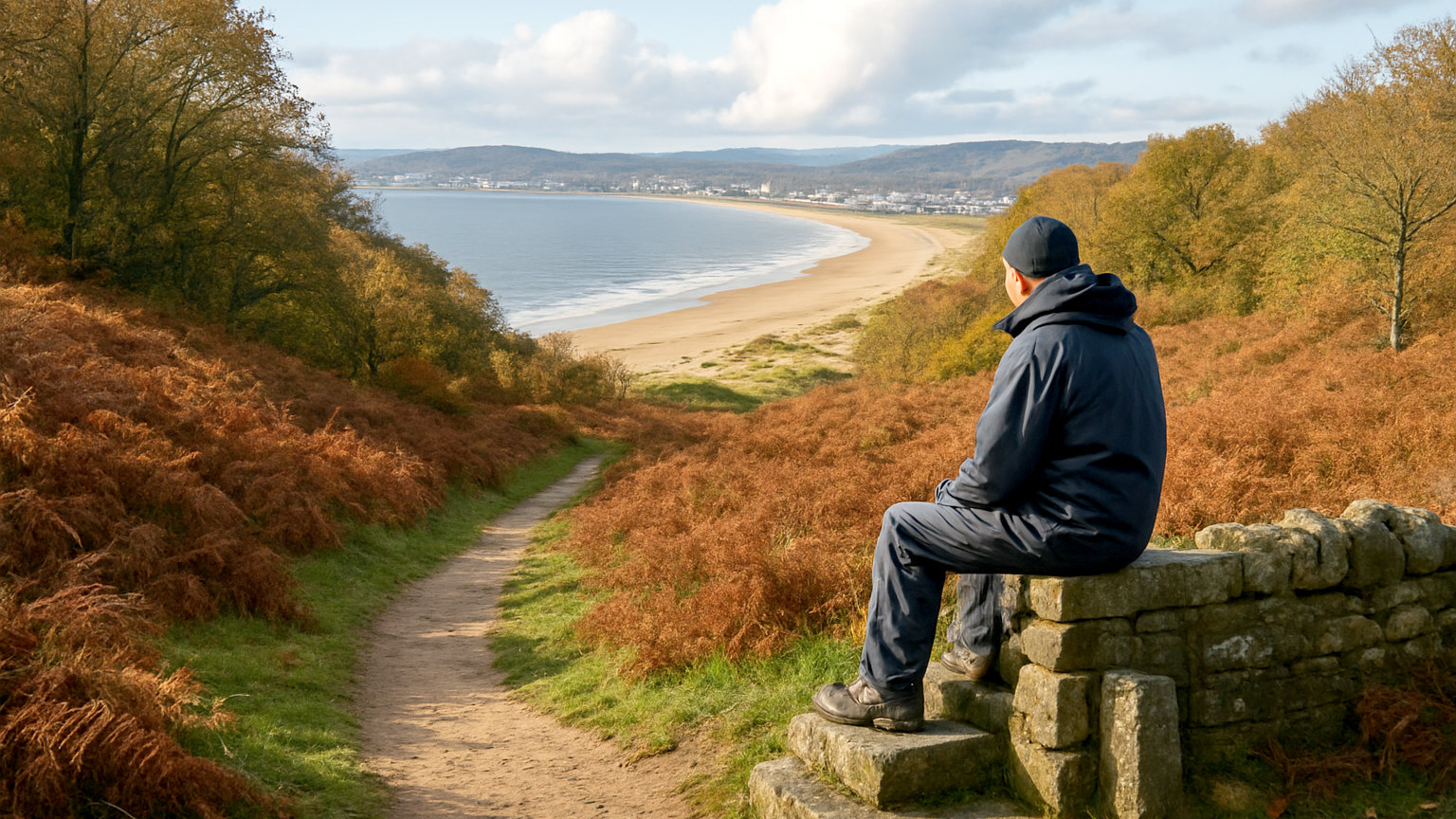
A former fishing village absorbed into the city, with a castle on the shore, a beach, independent shops and a good number of pubs and restaurants.
It is a short bus or train ride from the centre and is where a great many residents spend their weekends.
What about the hill?
The Law, an extinct volcanic plug rising above the city with a war memorial on top and a view over the estuary, the road bridge and Fife beyond.
It is a short climb from the centre and free, and it is the best introduction to the city's geography.
How do you get around?
On foot in the centre, which is compact, with buses to the suburbs and Broughty Ferry.
Trains run along the coast to Aberdeen and south to Edinburgh across the Tay and Forth bridges, both of which are notable structures in their own right.
What is nearby?
The Angus glens to the north, running into the southern Cairngorms and among the least visited valleys in Scotland. Glamis Castle and the Angus coast with its red sandstone cliffs.
Arbroath along the coast, where the smoked haddock carries protected status and can be eaten still warm at the smokehouses.
What about St Andrews?
Half an hour away in Fife, with a ruined cathedral, a castle, Scotland's oldest university and the golf course generally regarded as the birthplace of the game.
The town is small, coastal and worth a day, and the beach is among the finest in eastern Scotland.
Where should you eat?
The waterfront and the west end near the university, with a growing independent scene. Broughty Ferry for seafood and pubs.
Prices are low even by Scottish standards, and the city is among the cheapest urban destinations in Britain.
How long do you need?
Two nights covers the museum, the ships, the Law and Broughty Ferry, with a day for St Andrews or the Angus coast.
It works well as a stop between Edinburgh and Aberdeen rather than only as a destination.
What about the bridges?
Two cross the Tay side by side. The road bridge carries traffic to Fife, and the rail bridge replaced an earlier structure that collapsed in a storm in 1879 while a train was crossing, killing everyone aboard. The stumps of the original piers are still visible in the water beside the current bridge, which is a sobering thing to see from the train.
One final note: the city claims the best sunshine record in Scotland, helped by its position on the east coast in the lee of the hills. That does not make it warm, but it does make it noticeably drier than Glasgow or the west.