Cardiff became the capital of Wales only in 1955 and has spent the decades since building itself into the role. It is compact, noticeably cheaper than English cities of comparable size, and unusual in having a genuine medieval castle in the middle of the shopping district and a major international stadium a few streets from it.
What is the castle actually like?
Two things at once. There is a Norman keep on a motte, and a Roman fort wall beneath it, both of which are what you expect. Attached to them is a Victorian mansion remodelled by William Burges for the Marquess of Bute, then reputedly the richest man in the world.
Those interiors are the reason to go. They are extravagant beyond reason, with gilded ceilings, murals and a rooftop garden, and they are unlike anything else in Britain. The wartime tunnels within the walls, used as air raid shelters, are included.
What is there at Cardiff Bay?
A redeveloped dockland about two miles south of the centre, reached by a short train ride, a bus or a waterbus along the river. The docks once exported more coal than anywhere in the world.
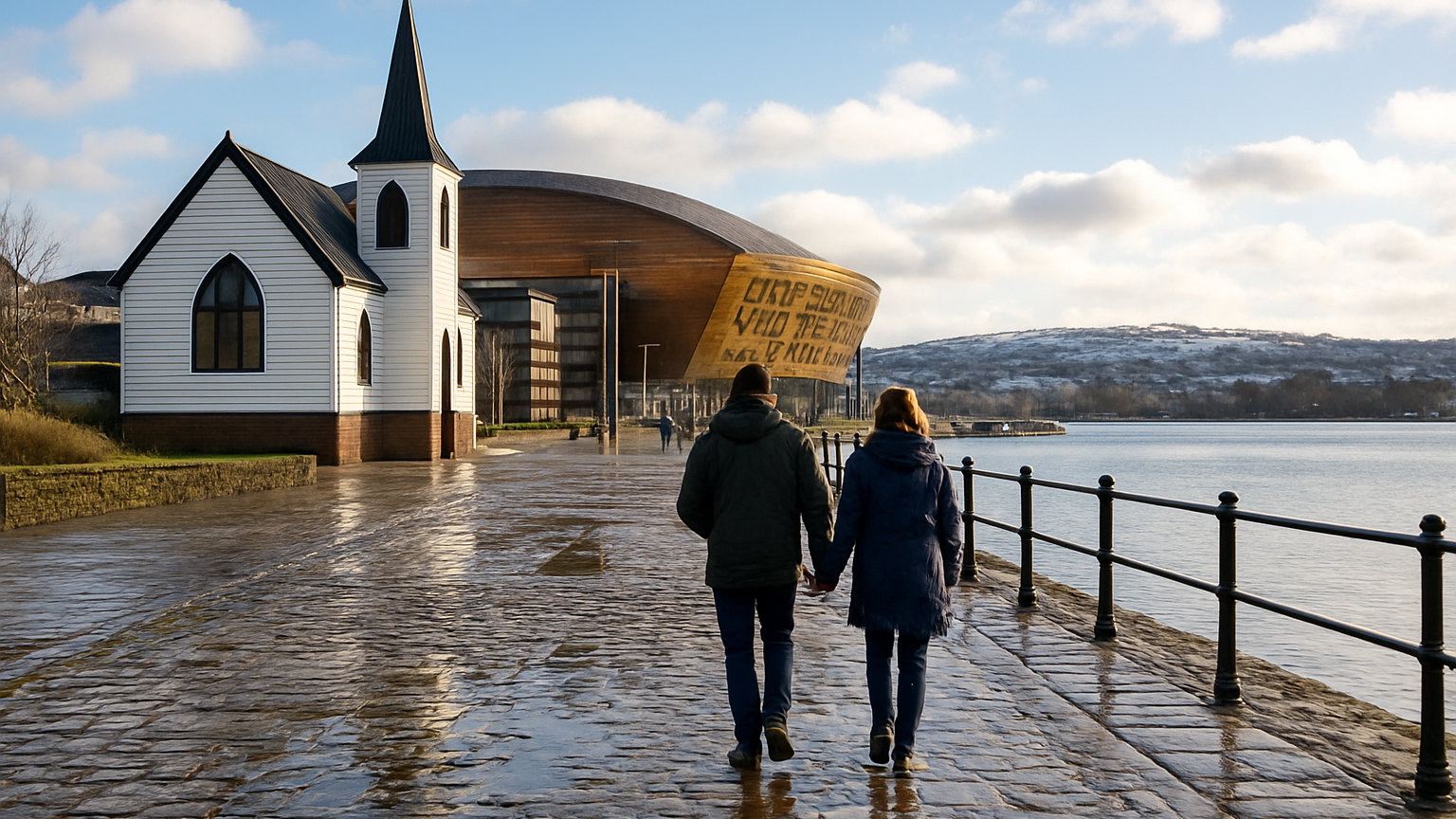
The Wales Millennium Centre, with its inscribed bronze frontage, is the main arts venue. The Senedd, home of the Welsh Parliament, is open to visitors and free. The Norwegian Church, where Roald Dahl was christened, sits on the waterfront, and the barrage walk across to Penarth gives the best views back.
What are the arcades?
Cardiff has more surviving Victorian and Edwardian shopping arcades than any other British city, which is why it is sometimes called the city of arcades. They run between the main streets in a network of glass roofed passages.
They hold most of the city's independent shops, coffee places and record stores, and wandering them is among the more pleasant hours available in the centre. Castle Arcade and Morgan Arcade are the finest.
Is St Fagans worth the trip?
Yes, and for many visitors it is the best thing in the area. It is an open air museum a few miles west of the city, where dozens of buildings from across Welsh history have been dismantled, moved and rebuilt on a large parkland site.
Farmhouses, a chapel, a school, a row of ironworkers' cottages furnished to different decades, and a working smithy sit in the grounds. It is free to enter and needs the best part of a day.
What happens on a match day?
The Principality Stadium sits in the middle of the city with a capacity of over seventy thousand, which means an international rugby fixture puts a substantial crowd directly into the centre.
The atmosphere is genuinely something to experience, with singing in the streets from the morning. It also means hotels sell out months ahead at raised prices, restaurants require booking and the centre is impassable. Check the fixture list before booking a weekend either way.
What else is free?
National Museum Cardiff, which holds a substantial art collection including French impressionists alongside natural history, charges nothing. So do the Senedd, Bute Park behind the castle and the beaches at Penarth and Barry a short train ride away.
Wales operates free entry across its national museums, which makes a Cardiff weekend inexpensive compared with English cities.
How long do you need and how do you get there?
Two days covers the castle, the bay, the arcades and an evening out. Three lets you add St Fagans or a trip to Castell Coch, a Victorian fantasy castle in woods on the northern edge of the city.
Trains from London Paddington take around two hours. The city centre is small enough to walk everywhere, and the bay is the only part needing transport. Bristol is under an hour away, which makes combining the two straightforward.
Is it a walkable city?
Very. The castle, the arcades, the stadium and the main museum sit within a few minutes of each other, and Bute Park behind the castle gives a green route out towards the north of the city.