Newcastle upon Tyne sits on a steep north bank of the river with Gateshead facing it across the water, and the pair function as a single destination. It is among the cheapest city breaks in England, has a nightlife reputation that occasionally overshadows everything else, and holds one of the finest streets in Britain.
What is the deal with the bridges?
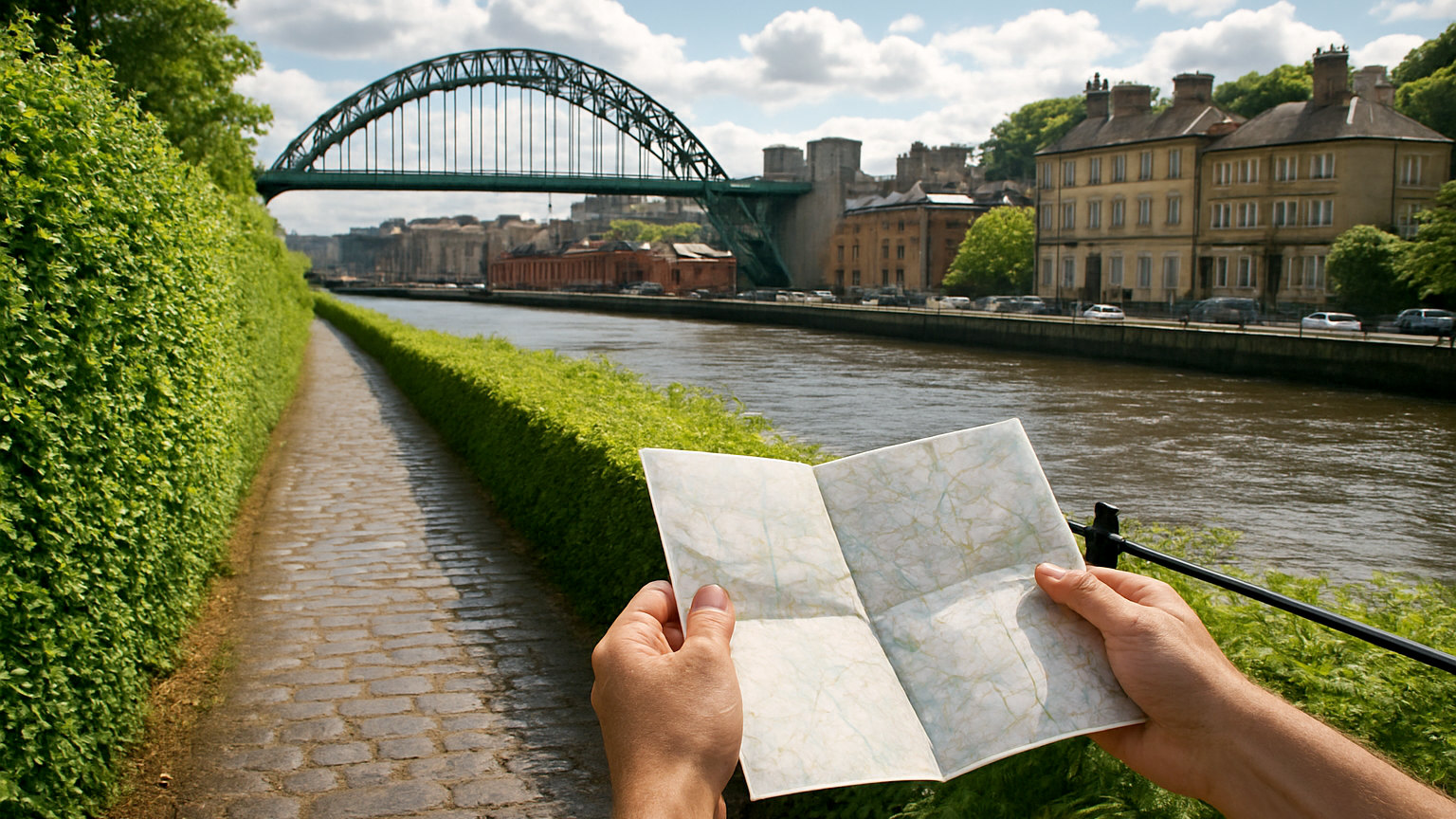
Seven bridges cross the Tyne within a short stretch, and the view along them is the image of the city. The Tyne Bridge, a green steel arch opened in 1928, was a prototype for the larger Sydney Harbour Bridge, which followed a similar design.
The Gateshead Millennium Bridge is the modern counterpart, a footbridge that tilts to let vessels pass and is known locally as the blinking eye. The High Level Bridge, carrying road and rail on two decks, was Robert Stephenson's work.
What is Grey Street?
A curving Georgian street sweeping down from a monument towards the river, lined with classical facades and repeatedly voted one of the best streets in the country. It forms part of Grainger Town, a planned nineteenth century development covering much of the centre.
Grainger Market, within it, is a covered Victorian market still in daily use. The scale and coherence of this quarter surprises visitors expecting a purely industrial city.
Which galleries and museums are free?
Most of them. The BALTIC, a converted flour mill on the Gateshead quayside, is a major contemporary art space with free entry and a viewing platform over the river.
The Great North Museum covers natural history and antiquities including material from Hadrian's Wall. The Laing Art Gallery and the Discovery Museum are also free. Alongside them stands the Glasshouse, a Norman Foster concert hall on the south bank.
Is the nightlife as advertised?
The reputation is earned and it is concentrated. The Bigg Market and the Quayside carry the boisterous end of it, while the Ouseburn Valley to the east holds the better music venues, independent breweries and pubs.
Jesmond, a short Metro ride north, has a more relaxed bar and restaurant scene. Anyone wanting an evening out that is not a stag weekend should head for Ouseburn or Jesmond rather than the centre.
Can you reach the coast easily?
Very. The Metro runs from the city centre to Tynemouth and Whitley Bay in around twenty five minutes, which puts a proper beach, a ruined priory on a headland and a lighthouse within a short journey.
Tynemouth has a large weekend market in the Victorian station and good surf. Few English cities have a coastline this accessible from the centre without a car.
What is nearby beyond the city?
The Angel of the North stands beside the A1 south of Gateshead, twenty metres tall with a wingspan wider than a jumbo jet, and is free to visit. Hadrian's Wall runs west from the city, with the best preserved central sections around an hour away.
Durham is twelve minutes by train, Northumberland's castles and beaches are within ninety minutes, and the Lake District is reachable across the Pennines in about two hours.
How much does a visit cost?
Less than most English cities. Hotel rates, food and drink are consistently below London, Edinburgh and the southern cities, and the major museums are free, so a weekend here compares favourably with almost anywhere.
Newcastle is around three hours from London by train on the East Coast Main Line and ninety minutes from Edinburgh, and the station itself, another Stephenson building, is worth a look on the way out.
How long do you need?
Two days covers the quayside, the bridges, Grainger Town and a gallery or two comfortably. A third day is well spent on the coast at Tynemouth or on a trip out to Hadrian's Wall or Durham, both within easy reach. The centre is compact and walkable, though it is built on a steep bank and the climb up from the quayside to the city above is a proper one, with staircases and a lift in the Tyne Bridge tower for anyone who would rather not. The Metro covers everything beyond walking distance at a modest flat fare.