Canterbury has been a destination for pilgrims since the murder of an archbishop in the cathedral in 1170, and the route to it produced one of the founding works of English literature. The cathedral, the abbey ruins and a small church nearby together form a World Heritage Site.
What happened to Becket?
Thomas Becket, Archbishop of Canterbury, was killed in the cathedral by knights who believed they were acting on the king's wishes after a long dispute over church and royal authority.
He was canonised within three years and the shrine became one of the major pilgrimage destinations in Europe until it was destroyed at the reformation. The site is marked in the cathedral.
What is the cathedral like?
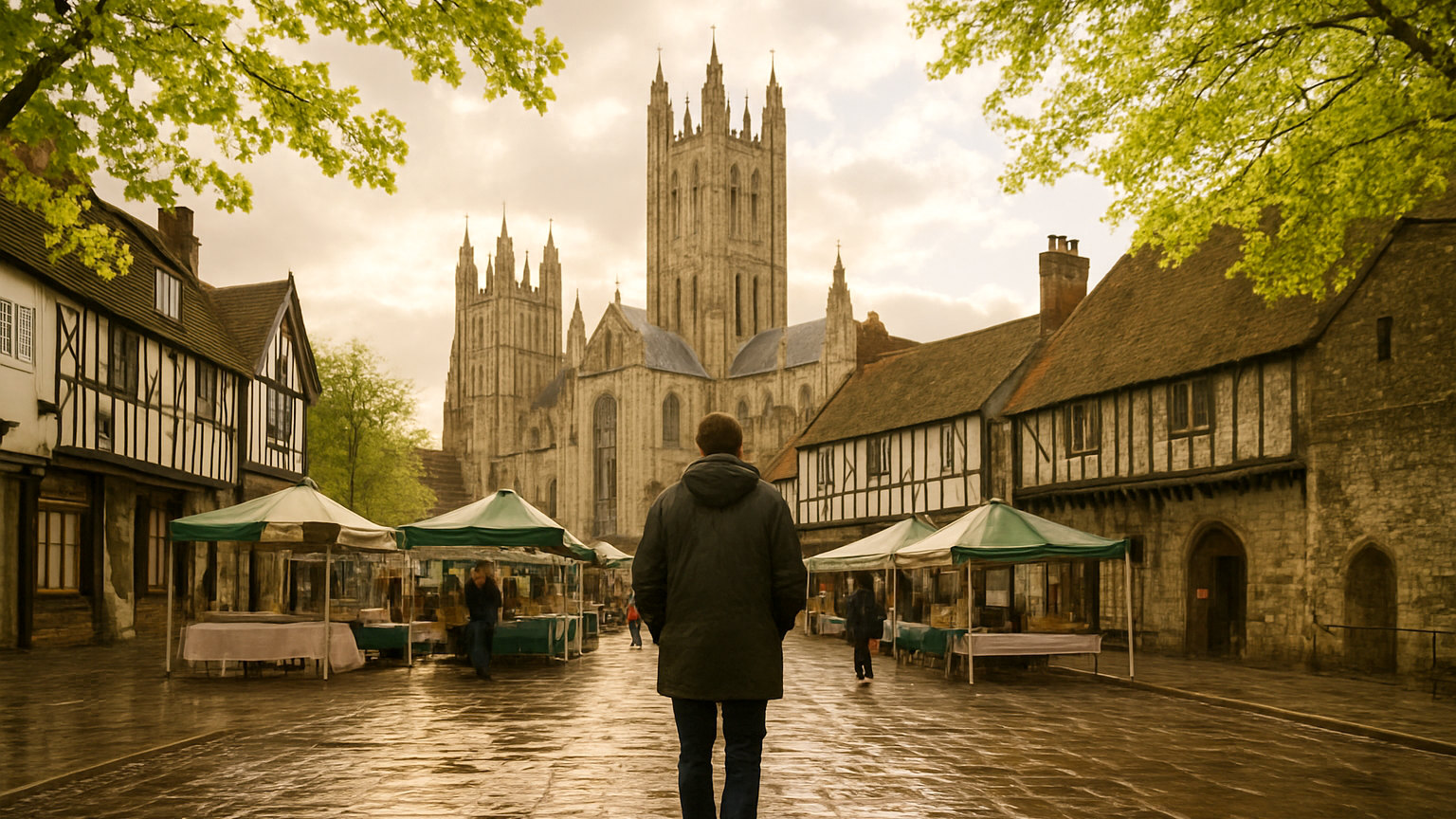
Enormous and layered, with a Norman crypt beneath a Gothic choir and nave, extensive medieval stained glass and a tower dominating the city.
Admission is charged. Attending a service, including evensong sung by the choir during term, is free and is among the better ways to experience the building.
What is St Augustine's Abbey?
The ruins of a monastery founded at the very end of the sixth century by the missionary sent to convert the English, which makes it one of the earliest Christian sites in the country.
It was destroyed at the dissolution and the excavated foundations are open, with a museum explaining the sequence.
What else survives?
A substantial stretch of city wall on Roman foundations, walkable in places, with a medieval gate at the western end that is among the largest surviving in England.
St Martin's Church, the third element of the World Heritage Site, is claimed as the oldest church in continuous use in the English speaking world.
What is the city centre like?
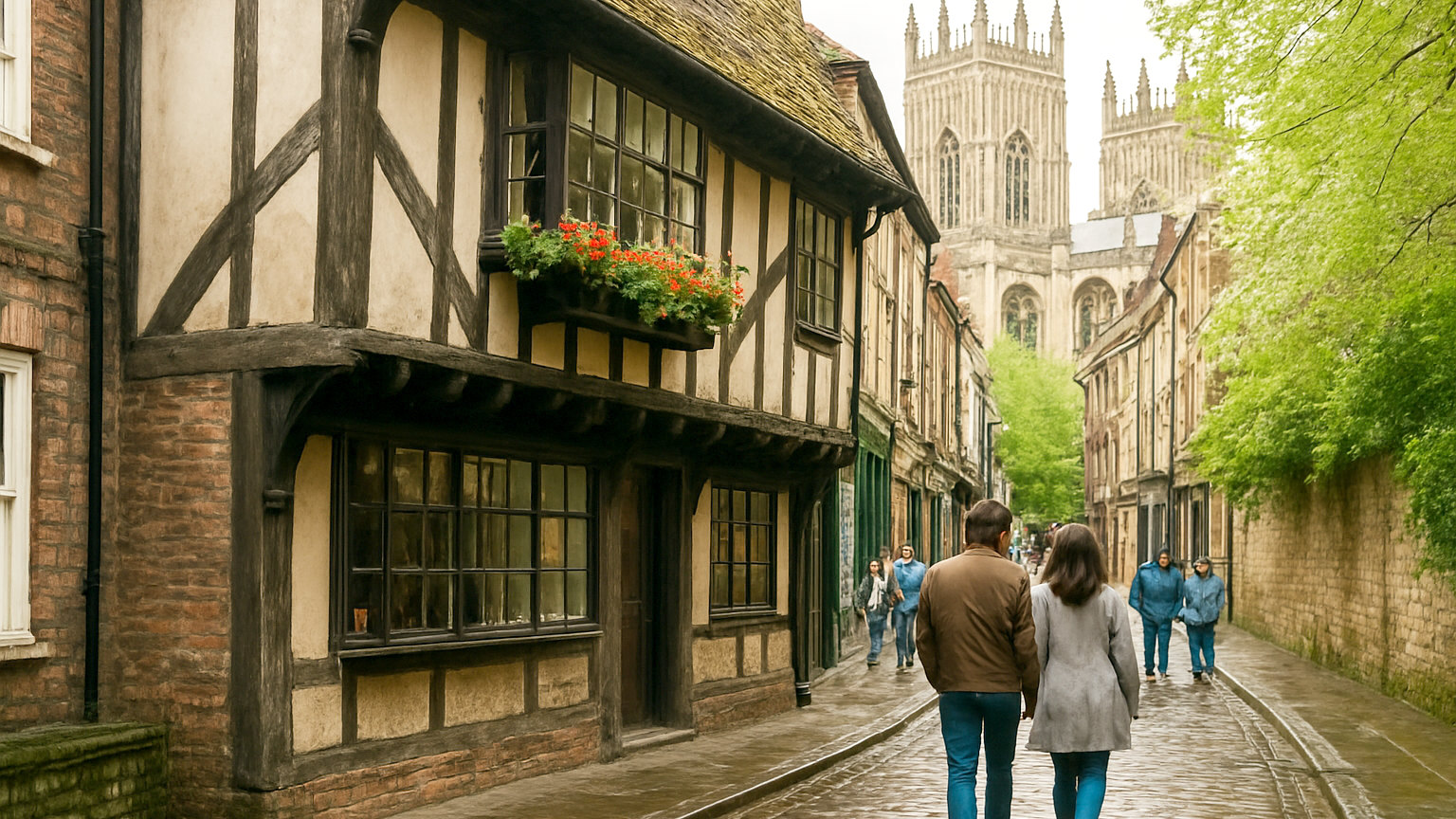
Compact, partly pedestrianised, with timber framed buildings, a river running through with punt trips, and a mixture of independent shops and chains.
Wartime bombing destroyed a substantial area, which was rebuilt, so the medieval fabric is patchy rather than continuous.
How do you get there?
By train from London in under an hour on the high speed service, with two stations serving different routes. The centre is a short walk from both.
It is among the easiest day trips from London, which is why the city can feel busy in the middle of the day and quiet in the evening.
What is nearby?
The Kent coast at Whitstable, Margate and Broadstairs, all within half an hour, giving oysters, galleries and beaches.
Dover with its castle and white cliffs, Sandwich, a remarkably preserved medieval town, and the Kent Downs.
What about the literary connection?
The pilgrimage to the shrine framed a well known collection of stories written in the fourteenth century, which is central to the development of literature in English.
A visitor attraction in the city presents the tales, and the pilgrim route from London has been revived as a long distance path.
When should you go?
Spring and autumn. Summer brings substantial numbers including school groups, and the cathedral in particular is busiest in the middle of the day.
Evensong on a winter afternoon in a near empty cathedral is a completely different experience from a July morning.
How long do you need?
Two nights, or a day trip from London if the cathedral is the only objective. Two days allows the abbey, the walls and a coastal afternoon.
Staying overnight is worthwhile, since the day visitors leave by late afternoon and the city becomes considerably calmer.
What else is in the city?
The Beaney House of Art and Knowledge, free, combining a museum and gallery in the high street. The Marlowe Theatre, named for the playwright born here. A Norman castle keep, and the remains of the Greyfriars, the first Franciscan house in England, built over a stream.
What about the pilgrim route?
The historic route from London has been revived as a long distance path, following green lanes and ancient tracks across Kent and taking several days to walk. Sections make good day walks with trains at either end, and the final approach into the city on foot is a considerably better arrival than the station.