Rock pooling is the closest thing the British coast has to a guaranteed activity. It costs nothing, works for almost any age from about three upwards, needs no equipment beyond a bucket, and delivers something every time. It also depends entirely on the tide, which is why some families find it magical and others find nothing at all.
When should you go?
At low tide, and ideally on a spring low, which occurs around the full and new moon and exposes far more of the shore than a neap tide.
Arrive an hour or so before low water and work down the shore as the sea retreats, then move back up as it returns. Tide tables are published free and checking them is the difference between a good session and a wasted trip.
What will you find?
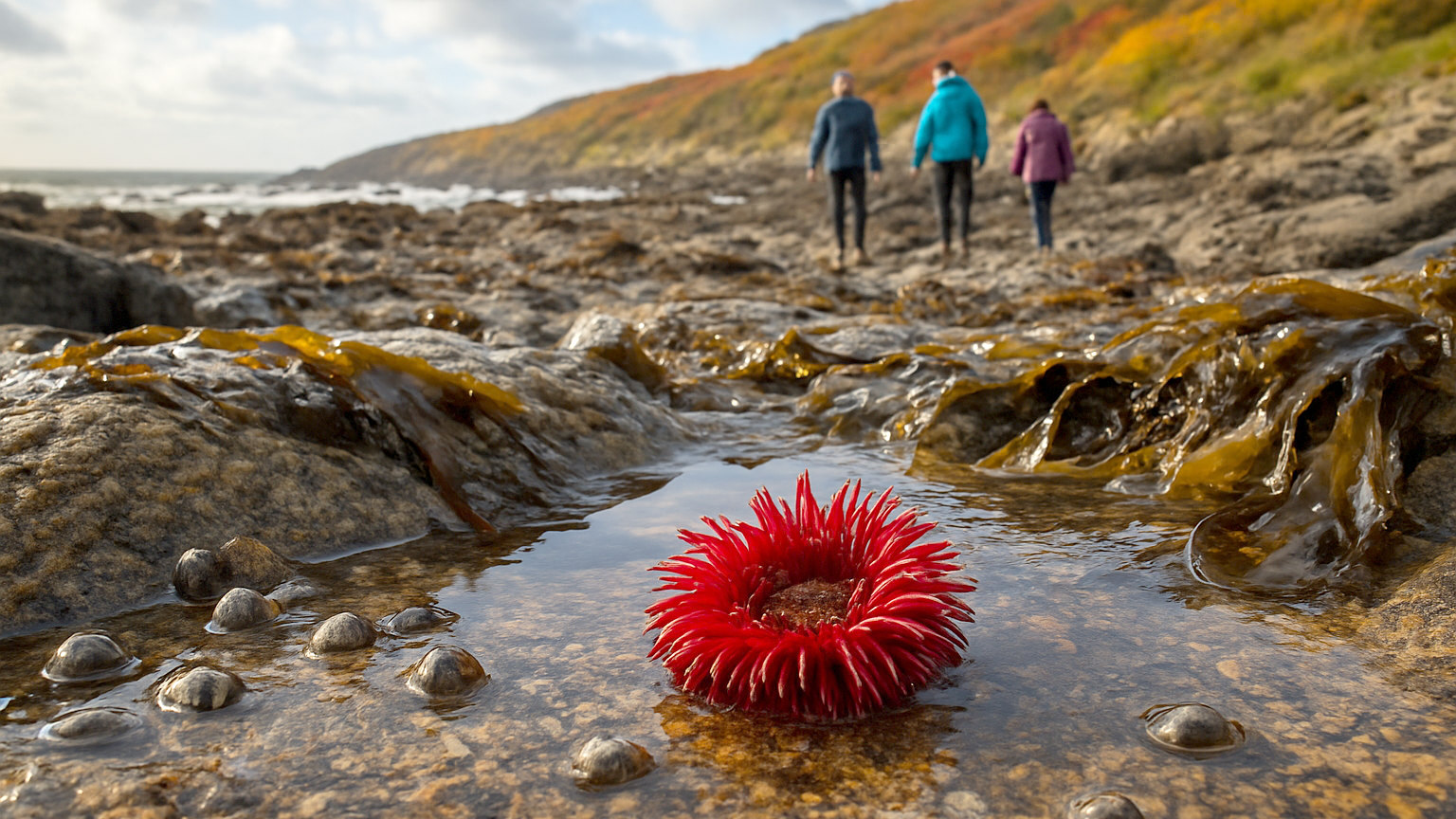
Shore crabs, hermit crabs, blennies and gobies, prawns, shrimps, anemones of several colours, limpets, periwinkles, mussels and starfish. On a good low tide you may find brittlestars, cushion stars and small fish trapped in deeper pools.
Further down the shore, where it is exposed only on the biggest tides, there are sea urchins, larger anemones and occasionally an octopus in the south west.
Which coasts are best?
Anywhere with rocky shore and a decent tidal range. Cornwall and Devon are outstanding, particularly the south Cornish coves. Pembrokeshire, the Gower and the Llyn Peninsula in Wales.
The Yorkshire coast around Robin Hood's Bay has broad rock scars exposed at low tide. Northumberland, the Scottish west coast and much of Northern Ireland are also excellent and far quieter.
What equipment do you need?
A bucket, ideally clear or white so you can see what is in it, and shoes with grip that you do not mind getting wet. That is genuinely all.
Nets are less useful than people expect and cause more damage. Gently lifting creatures by hand, or letting them swim into a bucket, works better and harms less.
How should you do it without causing harm?
Turn rocks carefully and always turn them back exactly as they were, since the community living underneath dries out and dies if left exposed. This is the single most important rule.
Keep animals in a bucket of sea water for a short time only and return them to the pool they came from. Do not take anything home. Do not prise limpets or anemones off rocks, which injures them.
What are the safety considerations?
Wet rock and seaweed are extremely slippery, and turned ankles are the most common injury. Barnacle covered rock cuts skin readily.
More seriously, keep track of the tide. Rock pooling takes you away from the beach and down the shore, and the return route can flood before you notice. Watch where the water is and go back up well before you need to.
How do you keep children engaged?
Give them their own bucket and a target, whether counting species or finding a crab. A simple identification chart, available free from several marine charities, turns looking into finding.
Keep sessions to an hour or two. The activity is more absorbing than most parents expect and children often want to stay longer than the tide allows.
Can you eat what you find?
Some of it, and shore foraging for mussels, winkles and razor clams is traditional in parts of Britain. It also carries genuine risk from pollution and shellfish toxins, and local restrictions apply in some areas.
Anyone considering it should check the water quality classification and local advice first, and shellfish from anywhere near an outfall or a harbour should be left alone.
Why does it work so well?
Because it is discovery rather than spectacle. Nothing is arranged for you, the pools are different every visit, and the finds are genuinely surprising.
Families who spend a fortune on attractions frequently report that the afternoon their children talk about afterwards was the one with a bucket on some rocks, which cost the price of the parking.